Gingerbread House Ideas: 21 Decorating Styles With Candy Counts

Jump to an idea (21)
- Before you start
- 1. Classic candy cottage
- 2. Red heart and white icing house
- 3. Modern minimalist house
- 4. Pastel house
- 5. Piped lattice roof
- 6. Pretzel log cabin
- 7. Snowy chimney house
- 8. Candy cane trim
- 9. Melted candy windows
- 10. Lit-from-inside village scene
- 11. Gumdrop roof
- 12. Ice cream cone trees
- 13. Kids' gingerbread people yard
- 14. Graham cracker house
- 15. Mug-top mini house
- 16. Candle-lit village board
- 17. Toy truck village
- 18. Flat cookie house set
- 19. Build the shell first
- 20. Set up a piping station
- 21. Centerpiece on a mirrored tray
- Final tips
Most gingerbread house ideas look great in a photo and fall apart on a kitchen table. This list sorts 21 of them by style, from classic candy cottages to graham-cracker houses and tiny mug toppers. Each one tells you what to buy, how much, and where it tends to go wrong.
If you are building a display for a table or shelf, pair this with Christmas mantel ideas for the surrounding decor, or browse everything on our Christmas hub.
Before you start
Icing is the whole job. Wilton's gingerbread house icing uses 4 cups of powdered sugar, 5 tablespoons of warm water and 3 tablespoons of meringue powder, beaten 7 to 10 minutes on low in a heavy-duty mixer until it forms peaks. It makes about 3 cups. That is stiff icing for building. Use a tablespoon less water if it slumps. For thinner "snow" or flooding, Wilton adds about 1 teaspoon of water per cup of icing.
Keep a damp towel over the bowl, since icing crusts fast. Wilton says not to substitute raw egg whites.
Decorate flat, then assemble. Walls are easier to ice lying down. Let decorated pieces set at least 30 minutes before standing them up, and prop walls with cans or jars while the icing hardens.
Allergy and safety notes.
- Gingerbread contains wheat, and meringue powder contains egg. Many candies carry milk, soy, peanut or tree nut warnings, so read each label.
- Tiny silver beads and similar decorations can be a choking hazard for small children, and some are labeled for decoration only. Check the package.
- Use battery LED lights inside a house, not real candles. Keep any flame well away from houses and paper trims.
- A house that sat out for weeks and was handled by many hands is a display piece. Treat it as decoration, not dessert.
Rough candy planning. For a kit-size house, expect about 2 to 3 cups of assorted candy plus 1 cup of snow-type toppings. These are planning numbers, not a rule.
Pick your style first. Classic houses use lots of candy and bright colors. Modern ones use white icing and almost nothing else. Kids' versions need a pre-iced base and a candy limit. Mini and mug houses are for gifts, and graham-cracker houses are for anyone short on time or oven space. A village takes the longest and needs a board of at least 12 by 18 inches.
1. Classic candy cottage
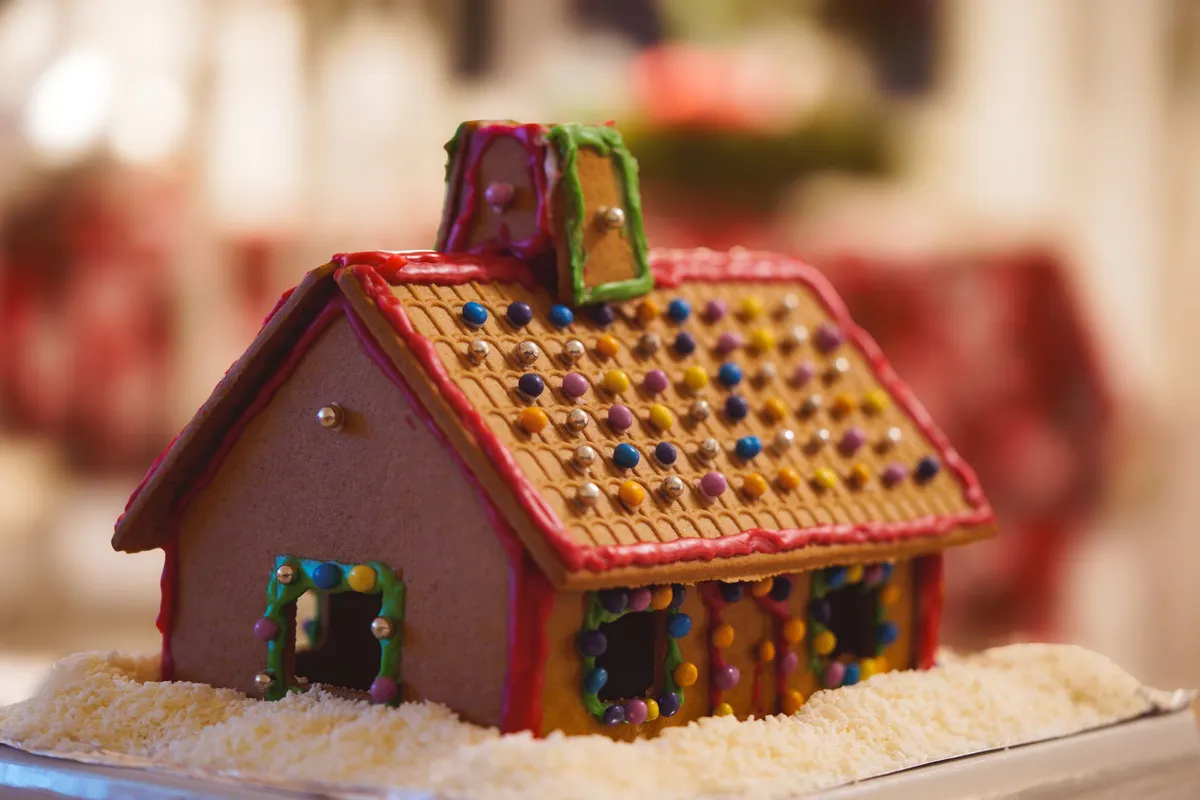
The look most people picture: a brown house with a chimney, white and colored piping and a scatter of candy. The house in the photo has red, green and purple icing and multicolored dots, sitting on coconut flakes for snow. Pick three to four candy types, not twelve. About 30 to 40 small candies handle the roof edges, door and windows. Pipe the lines first, then press candy in while the icing is wet. Put each color in a repeating pattern so it reads as planned rather than random.
2. Red heart and white icing house

White icing covers nearly the whole house here, with red hearts as the only strong color and a few pale blue dots. That limits your shopping list to two candies. Spread a thin layer of stiff icing on the roof with a small spatula, then press about 20 to 25 red candy hearts in rows. Surround the base with candy canes, tan cookies and green herb sprigs, like rosemary, for a tiny garden. Keep herbs as display only unless everyone knows they are on the house.
3. Modern minimalist house
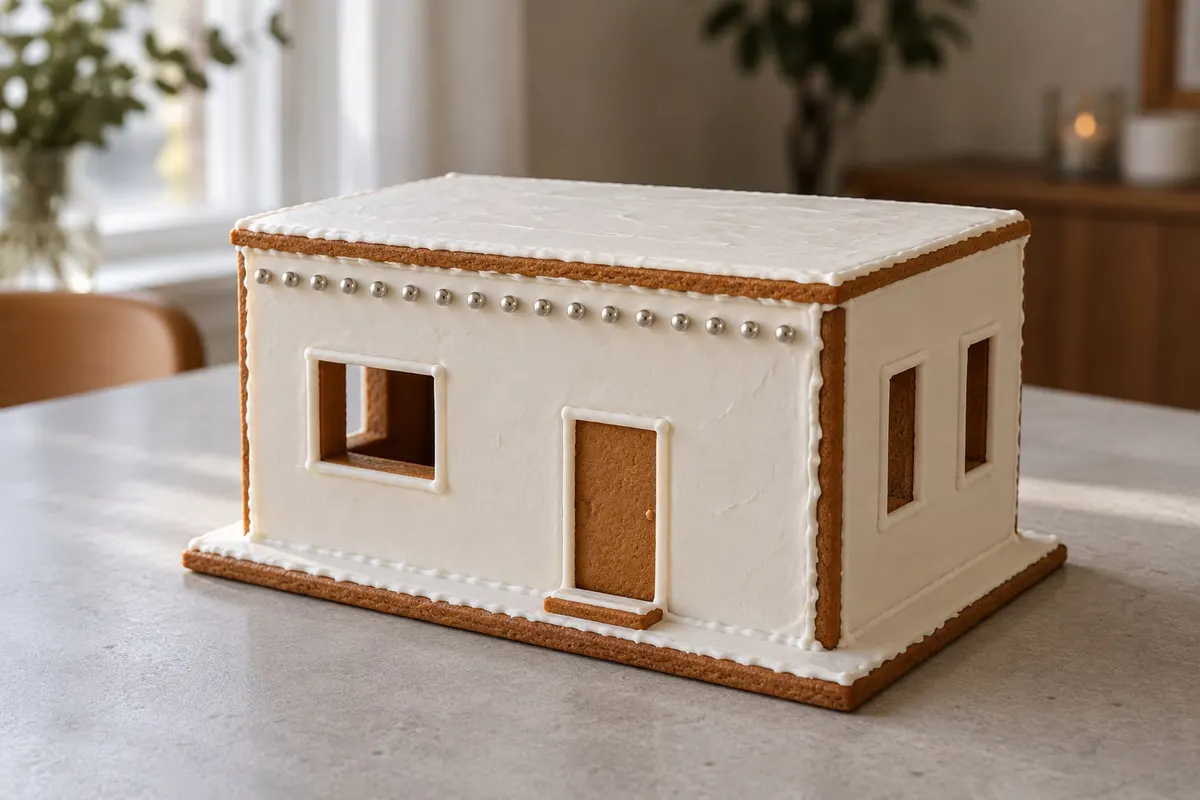
Flat roof, clean lines, white icing and one row of silver beads. A modern house works because you leave things out. Choose a rectangular shape, ice every surface smooth, then add a single line of about 15 to 20 beads along the front. A pastry bag with a small round tip draws thin, even lines. Check the bead packaging, since some silver decorations are for decoration only. For a younger crowd, swap them for white nonpareils or mini white chocolate chips.
4. Pastel house
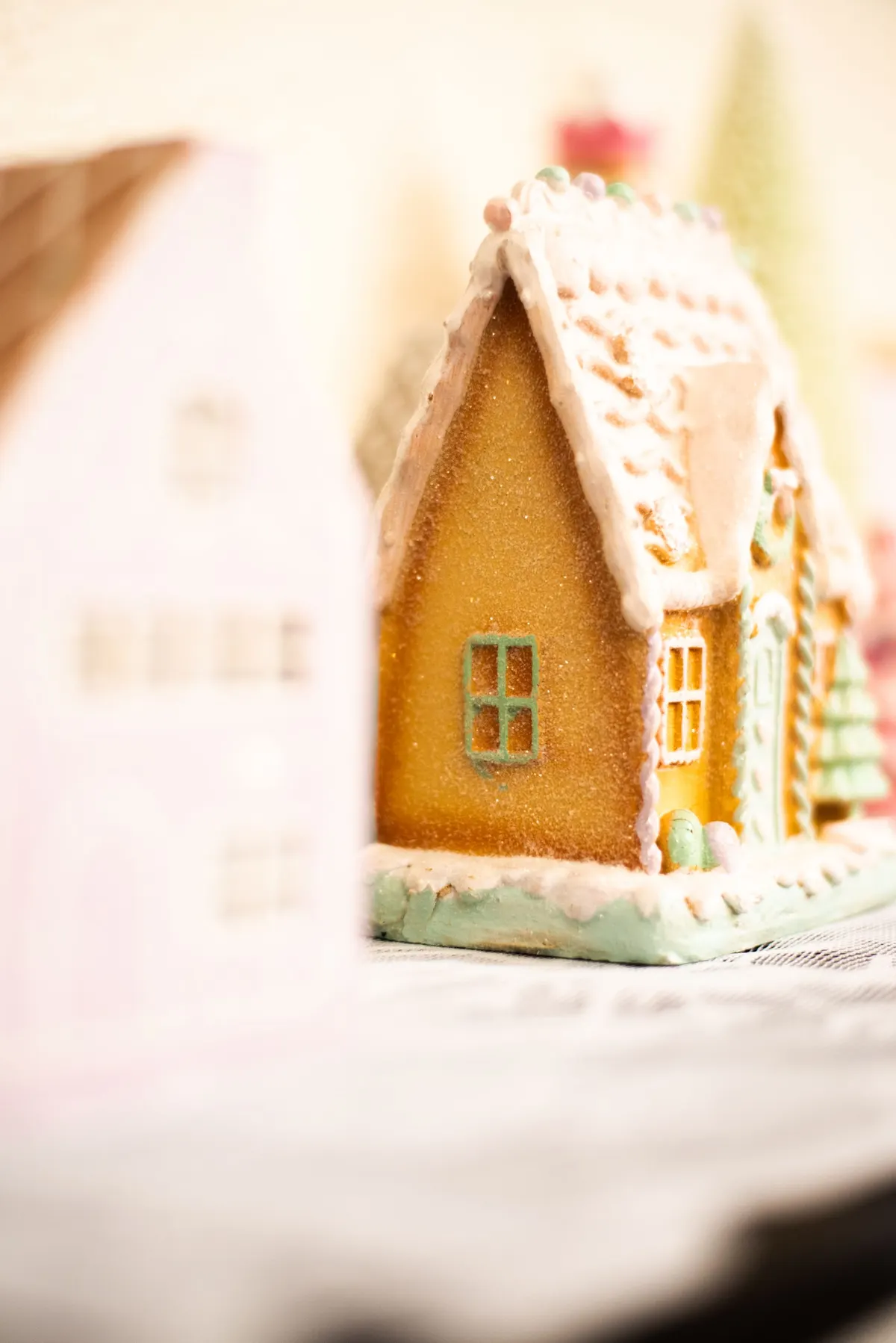
A golden-brown house with white icing, green window trim and pastel candies on a pale green base. Tint your icing with a few drops of gel color, which keeps the icing from thinning the way liquid color can. Choose one pale shade for trim, and use pastel candies in two colors for the roof line. Keep the pattern simple: trim in one color, roof dots in two, and nothing else on the walls. Pale colors show crumbs and smudges, so wipe your piping tip often and keep a damp paper towel beside the house.
5. Piped lattice roof
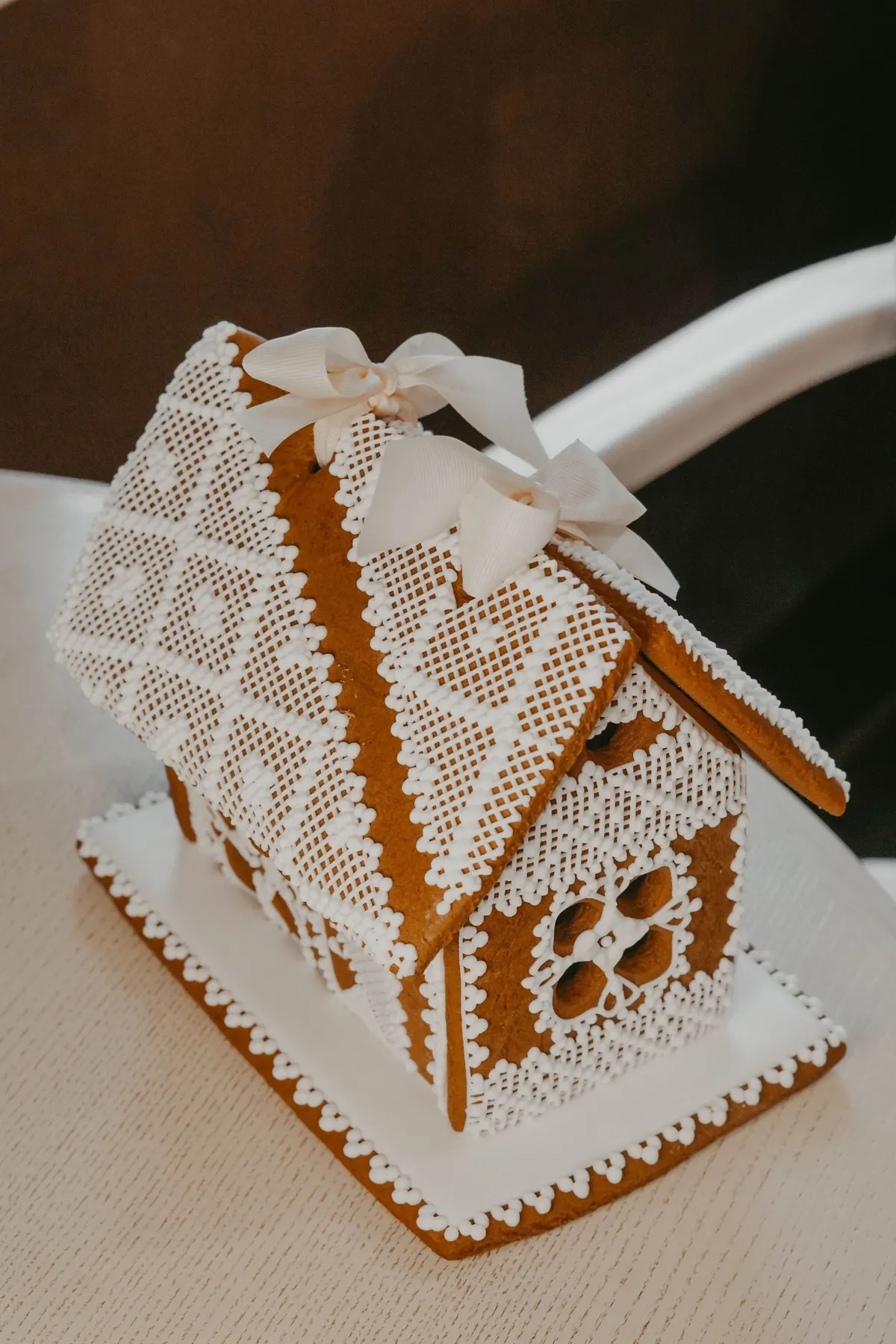
No roof candy at all: the house uses fine white icing in a crisscross lattice with scalloped edging and two ribbon bows. Pipe diagonal lines roughly 1/2 inch apart in one direction, let them set a few minutes, then cross them. Use a number 2 or 3 round tip and keep it close to the surface so lines stay thin. Practice the lattice on parchment first. Ribbon bows are not edible, so remove them before anyone eats the house.
6. Pretzel log cabin
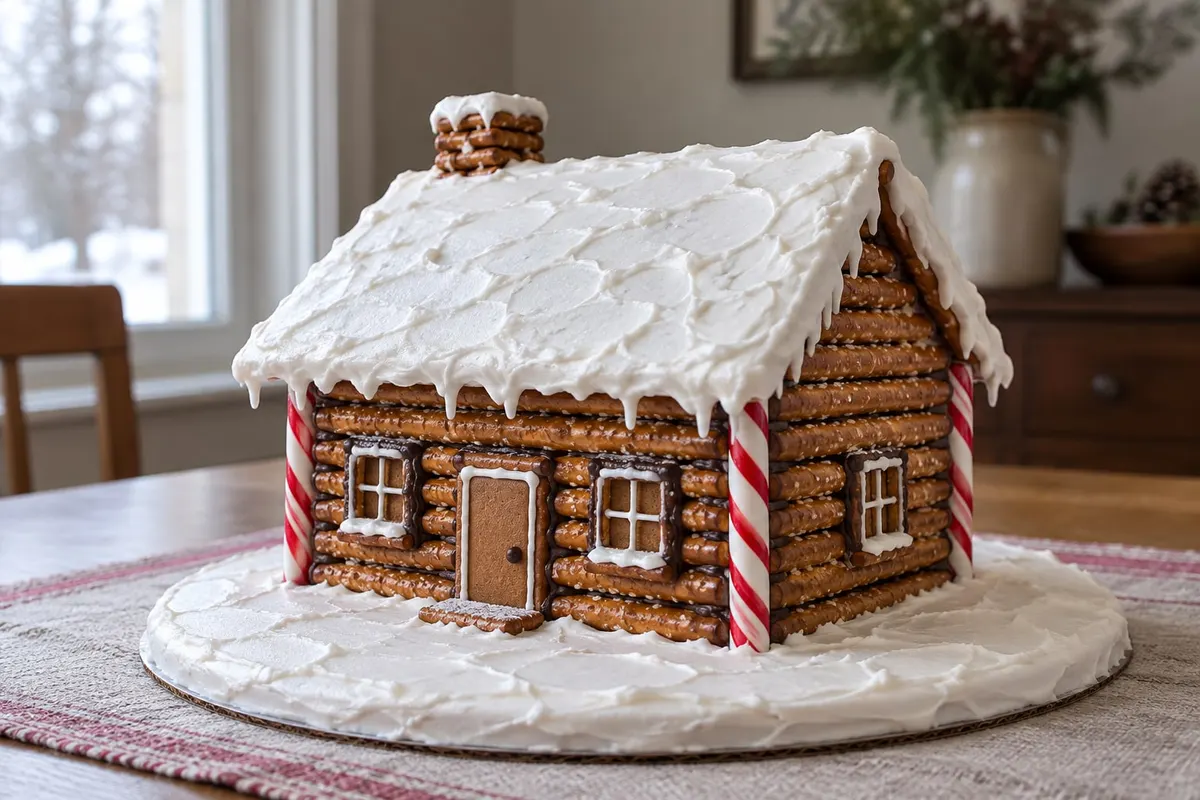
Pretzel rods laid sideways make a log wall, with white icing on the roof and red and white corner posts. Spread a layer of brown or white icing on each wall, then press rods in horizontally. Break the rods with a serrated knife to fit windows. About 20 to 24 rods cover a kit-size house. Use dark chocolate or brown-tinted icing between rods so seams look like wood. Add a short pretzel stick wood pile beside the door.
7. Snowy chimney house
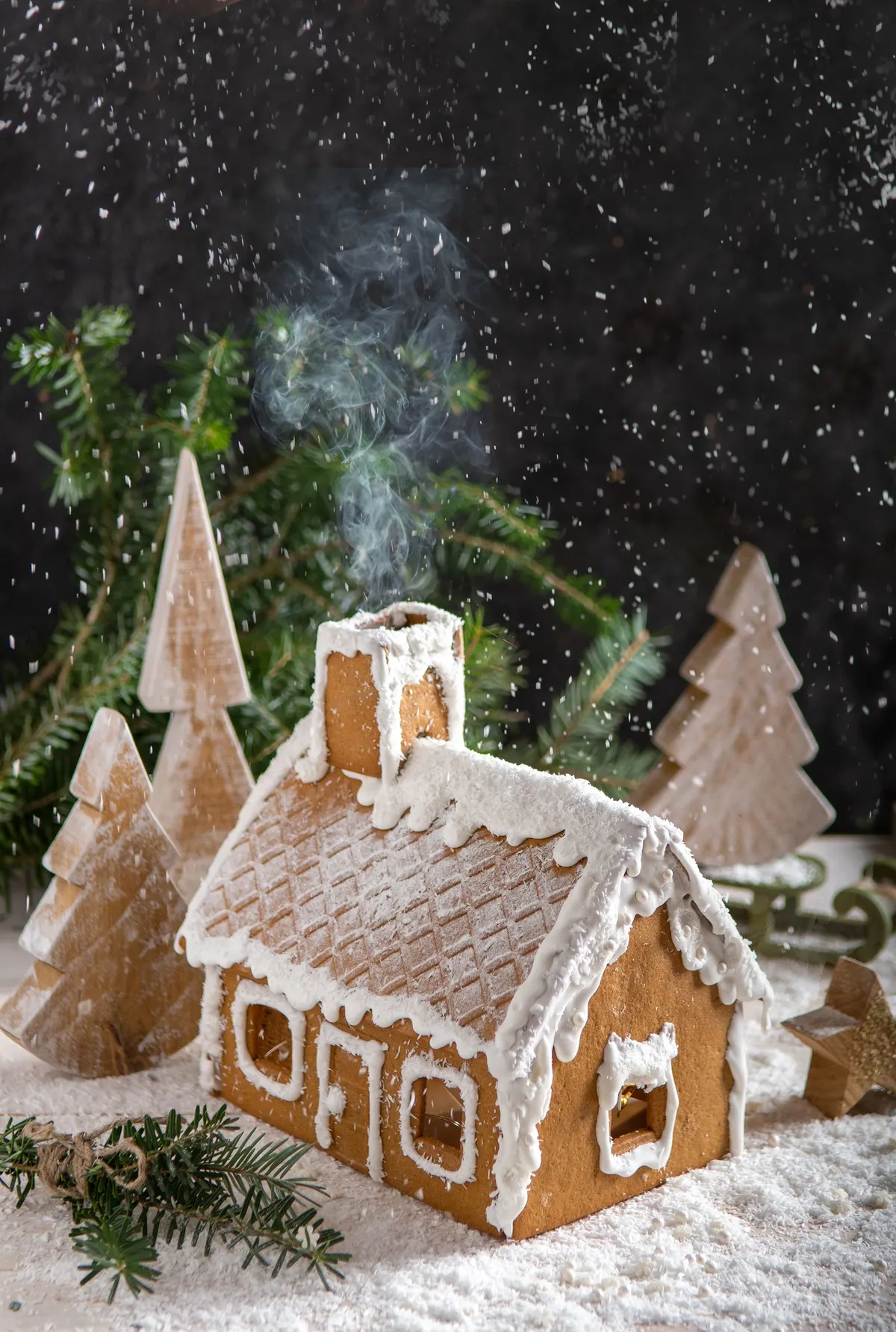
White icing on a scored roof, a chimney and a light dusting of powdered sugar. The photo shows a small house among wooden tree cutouts. Sift powdered sugar through a fine sieve onto a dry house for even snow, and do it last. For a chimney, cut four small rectangles of gingerbread and glue them into a box, as The Gardening Cook describes, with notches facing down to fit the roof peak. A small cotton ball of smoke is optional and not edible.
8. Candy cane trim

Candy canes are the easiest trim. Six canes cover a front porch and corner posts for one house. Break them with a gentle press, not a hammer, and expect a few to snap wrong. Break canes inside a bag, then fit the pieces. Use small bits for door handles and arches over windows. Hard candy gets sticky in humid rooms, so decorate in dry weather and keep finished houses away from a steaming kitchen.
9. Melted candy windows
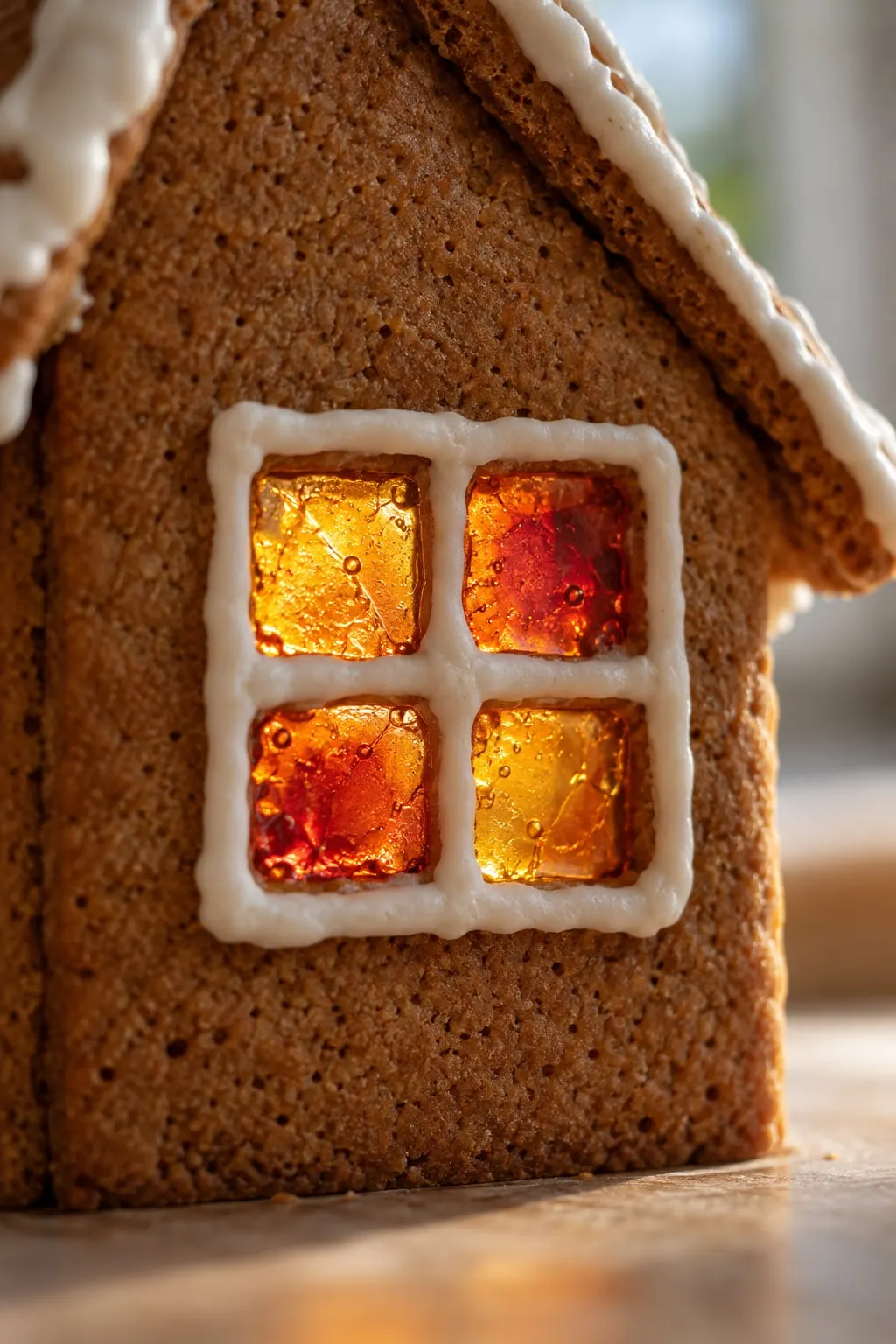
Stained-glass windows glow when light hits them. The Gardening Cook's method: crush hard candy, arrange it on a silicone mat and bake at 250°F for 6 to 8 minutes until it melts together. Score while warm, cool it, then glue the panes behind window openings. You can also fill cut-out windows before baking the walls. Use clear or amber candies for a golden look, and watch the oven closely because melted sugar is extremely hot.
10. Lit-from-inside village scene
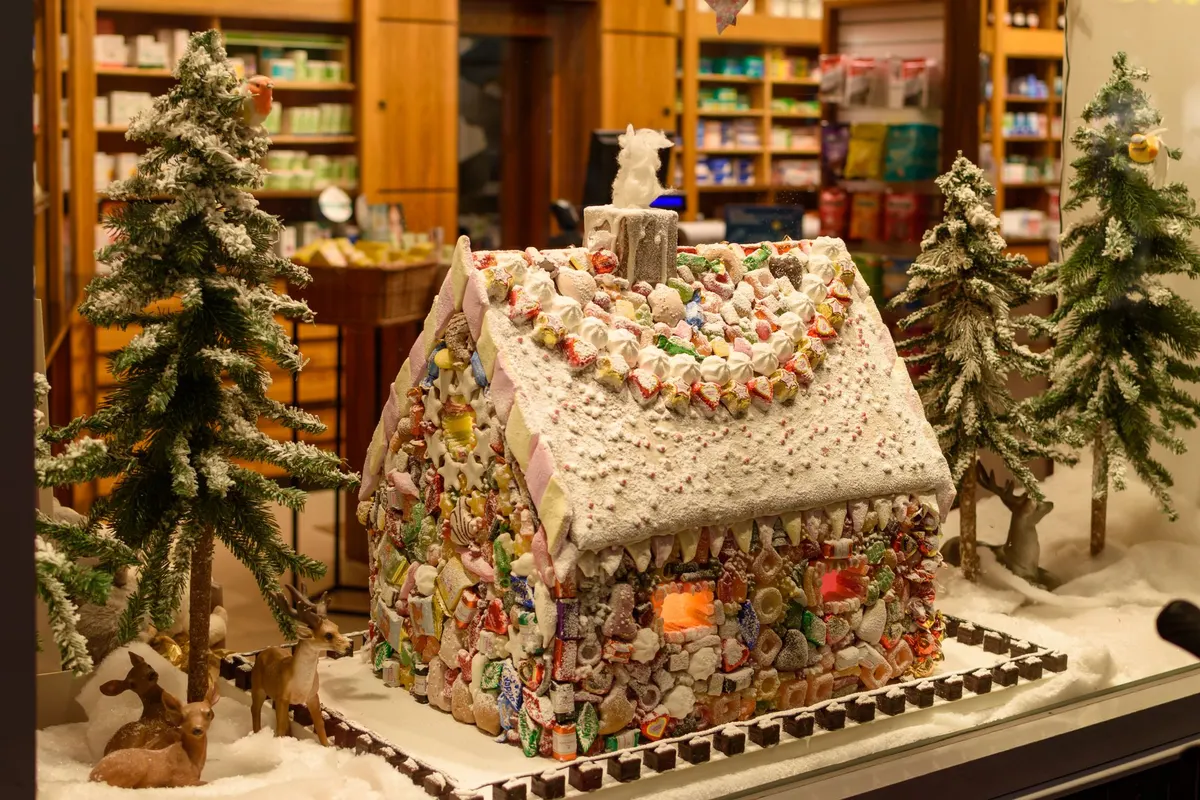
A candy-covered house with an orange-lit window sits among three snowy fir trees and deer figurines. Copy the glow with a battery LED tea light or small string of lights inside the house, with the cord fed out the back wall. Skip real candles, and keep any cord and battery pack out of the icing. Make a lawn of white coconut or powdered sugar and add small plastic or wooden trees. This is a good idea for a Christmas mantel if the house sits on a stable board.
11. Gumdrop roof

Sugar-coated gumdrops cover roofs and make bushes, doorknobs and path stones. Slice them in half lengthwise with a wet knife to make flat shingles, about 40 to 50 pieces for a roof. Cut with a wet blade and wipe between cuts. Row them in one color per row for a patchwork look, or use all one color for a bold look. Gumdrops are heavy, so use stiff icing and avoid piling on more than one layer.
12. Ice cream cone trees

Five cones in different heights make a forest. Use sugar cones, cover each in green stiff icing with a star tip, working from the bottom up, and dot with tiny red and silver candies. Make them a day ahead so they dry hard. Wilton suggests a number 18 star tip for the look. For a quicker version, coat cones in icing and roll in green sprinkles. Dust with powdered sugar for snow.
13. Kids' gingerbread people yard

Three gingerbread people with white, pink, turquoise and red icing stand in front of a house. This is the easiest kid project: bake or buy house-shaped and person-shaped cookies, then give each child their own bag of icing. Use 3 to 4 candy bowls with one rule: candy goes on cookies, not in mouths until decorating is done. Pre-ice a base layer so little hands can press candy in. Let cookies set a few hours before moving them.
14. Graham cracker house
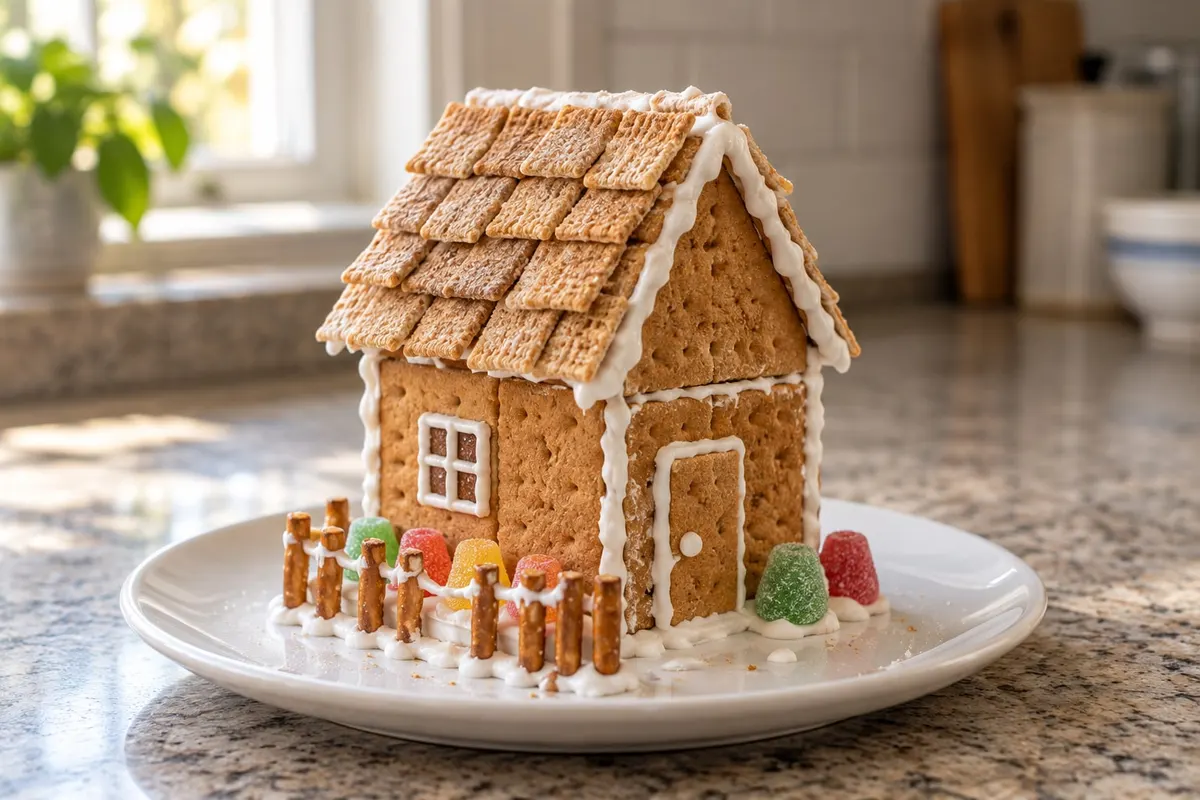
You need no baking. Graham crackers glued with stiff icing make a house in under an hour. The photo shows a cracker house with an overlapping cereal-piece roof, a pretzel stick fence with nine posts and six gumdrops. Cut or break crackers into four walls, then prop them with cans or jars until the icing hardens. Cereal squares glued in overlapping rows give a tidy roof. This is the best size for small apartments, since it fits a shelf or table corner.
15. Mug-top mini house
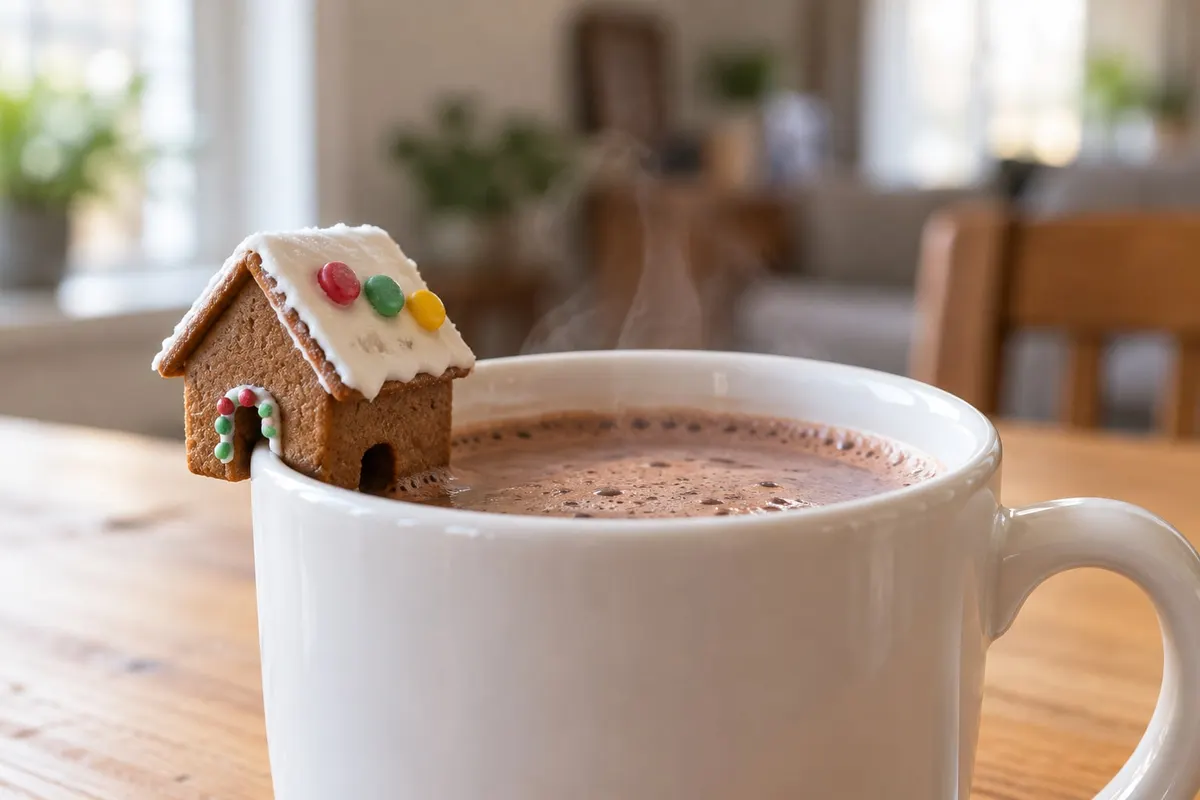
A tiny house cookie perched on the rim of a hot cocoa mug is a quick gift. Bake or buy a small house-shaped cookie with a slot cut where it meets the rim, then ice a roof and add three small candies. The slot keeps it from sliding. Make 6 to 8 for a party, let them dry overnight, and pack them flat in a box with parchment between layers. Tell guests whether the cookie is meant to be eaten, since the icing sets very hard. Keep the cookie off the hot drink, and watch for steam softening it if a guest sits it too close.
16. Candle-lit village board
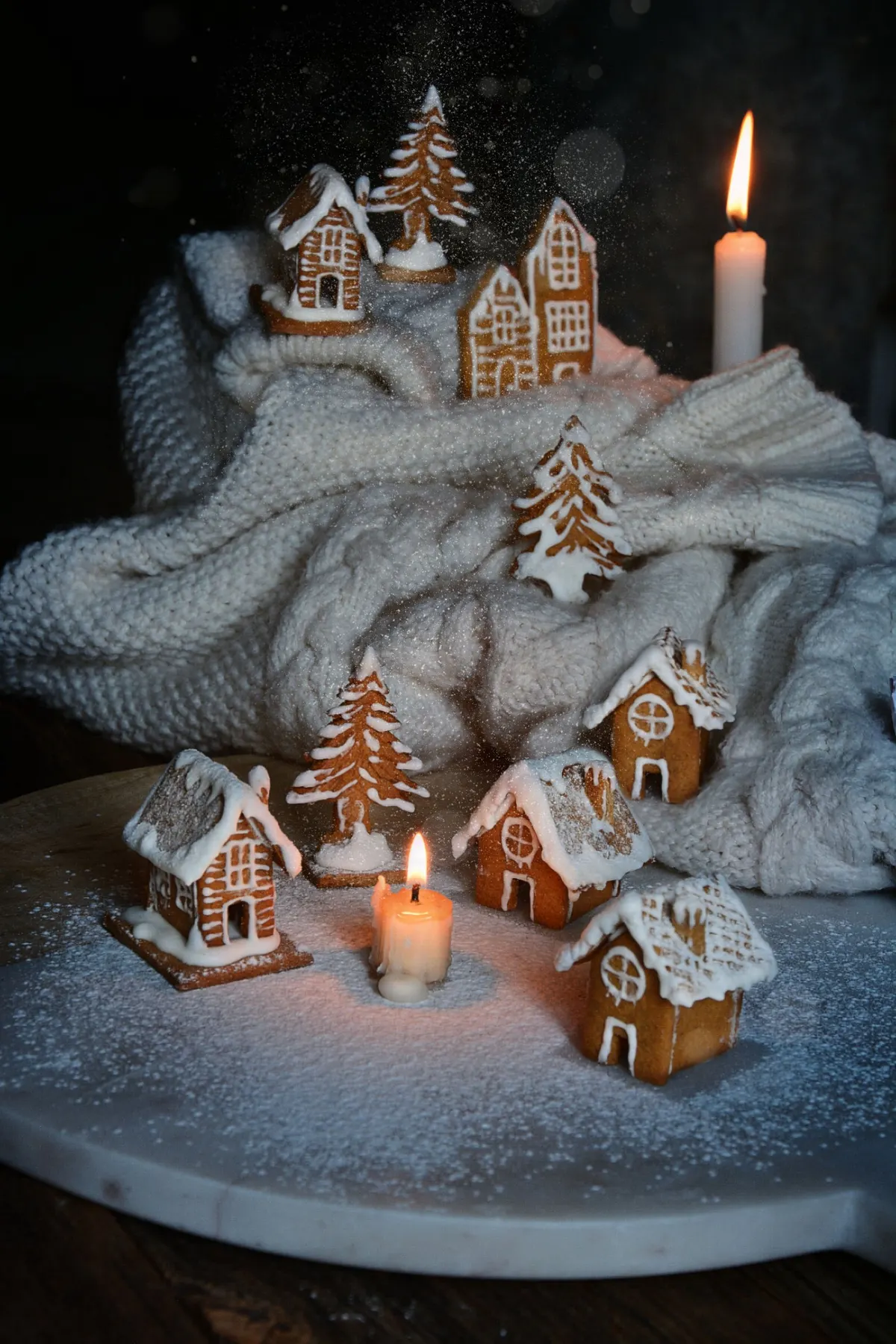
Seven gingerbread houses and three tree cookies sit on white knit fabric in the photo, with two lit candles beside them. For your own board, bake 5 to 7 small houses and arrange them in two staggered rows on a tray, with tree cookies between. Vary the roof height so it looks like a street. Swap real candles for battery ones, since fabric and flame are a poor mix. A 12 by 18 inch board fits about 5 mini houses.
17. Toy truck village

Three gingerbread houses, two small trees and a toy pickup make a quick scene. A kid-friendly twist is adding vehicles or toys to the sugar. Dust powdered sugar over a dark tray for a snowy road. Place the houses first, then add cones or tree cookies, then props. Use clean plastic toys, which makes the scene easier to take apart. This setup suits a Christmas table as a low centerpiece.
18. Flat cookie house set
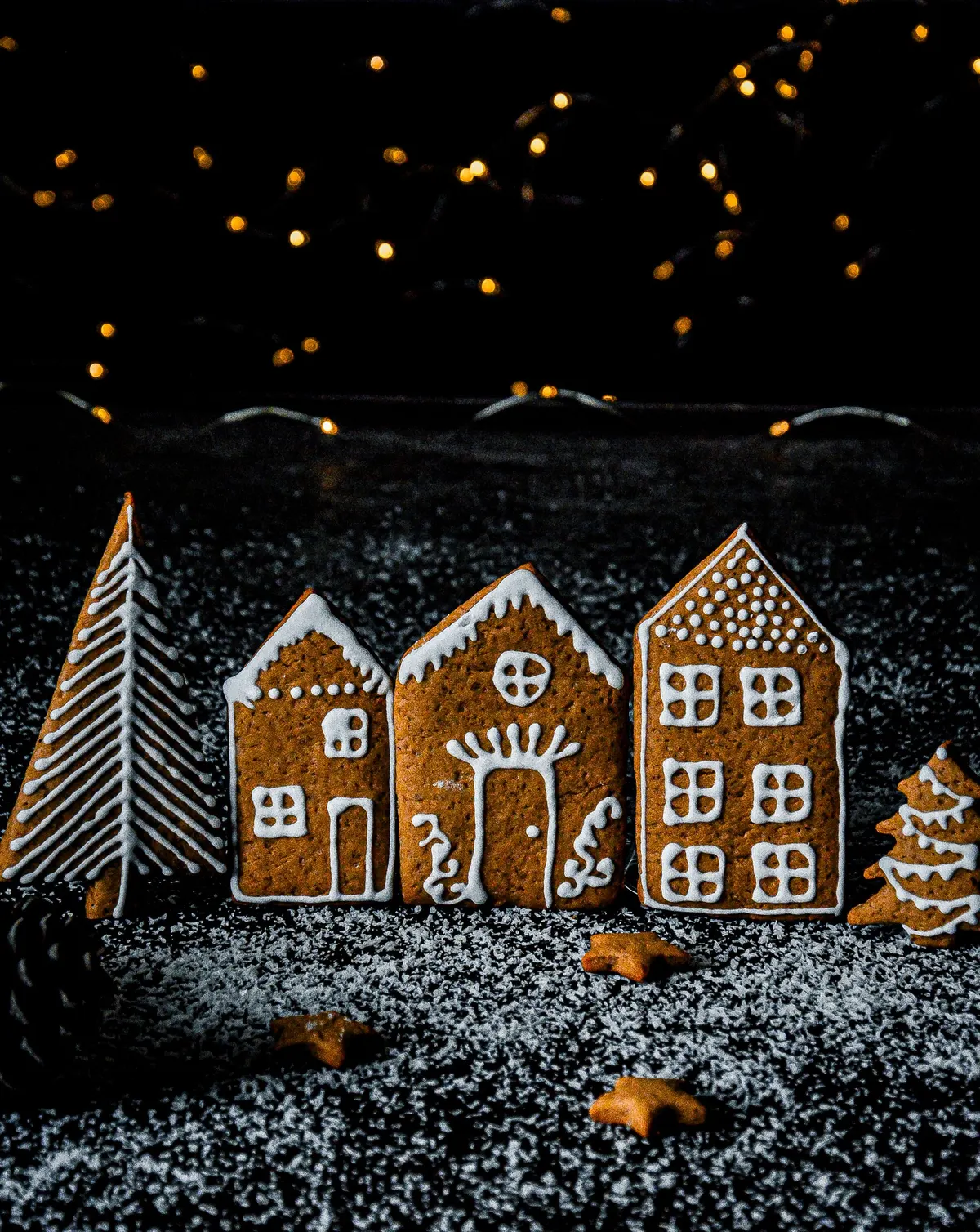
Skip construction altogether with flat house cookies, tree cookies and stars decorated with white icing. Bake 3 houses, 2 trees and 3 stars per tray, outline each, then flood with thinned icing. Wilton's flooding test: a spoonful drizzled back into the bowl should sink in about a count of 10. Let the cookies dry 8 hours or overnight, then stand them up on a tray with extra icing as a base.
19. Build the shell first
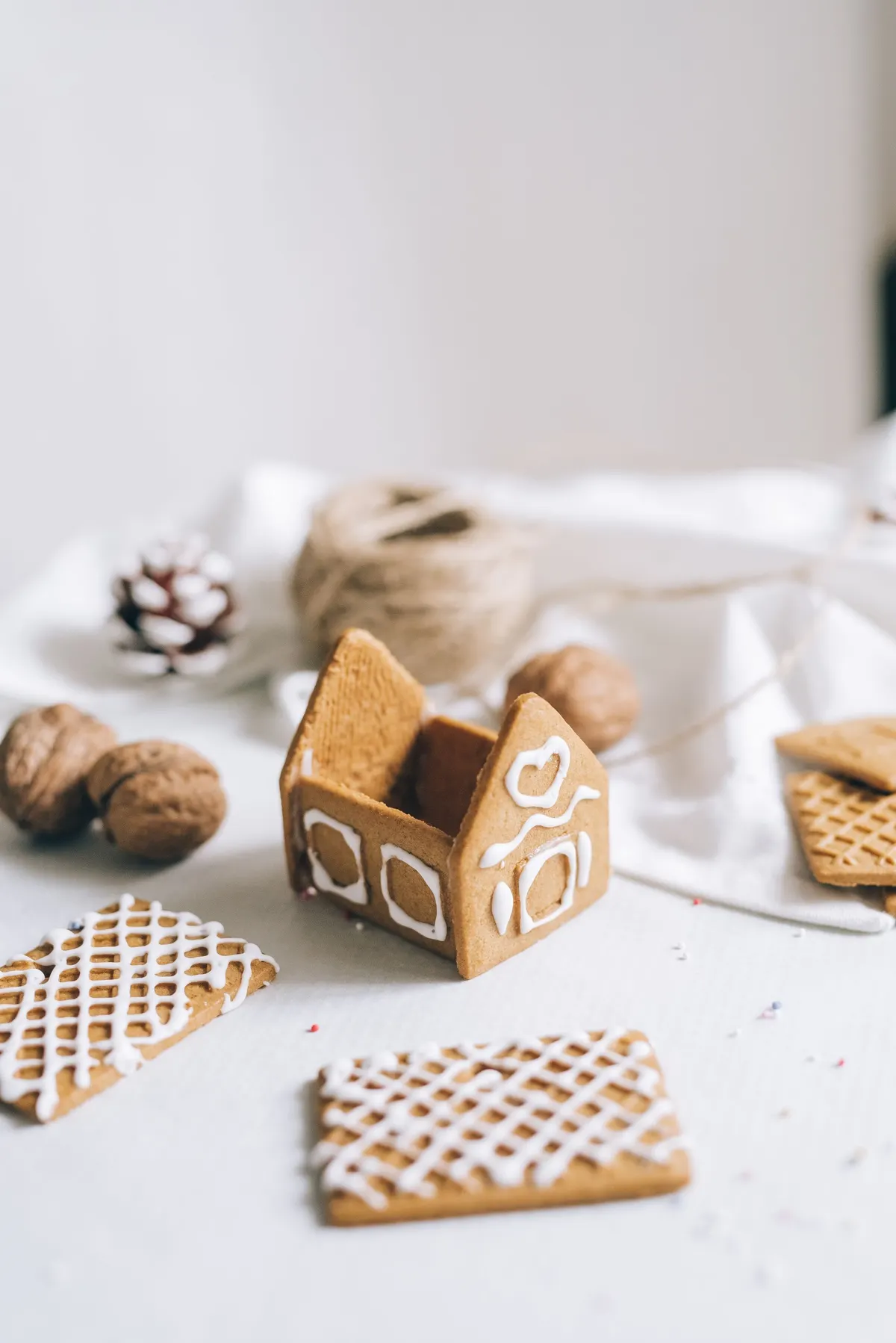
An unfinished house beside two iced roof panels shows the smart order. Decorate the walls and roof panels flat, let them set 30 minutes or more, then glue the walls together. Prop them with cans, wait for them to harden, then attach the roof. Pipe a line of icing about as thick as a pencil along each joint, as Eater suggests, and hold for 30 to 60 seconds. Add the fragile details last: icicles, small candies and sifted sugar snow. Thin icicles snap if you move the house afterward, so put it where it will stay.
20. Set up a piping station
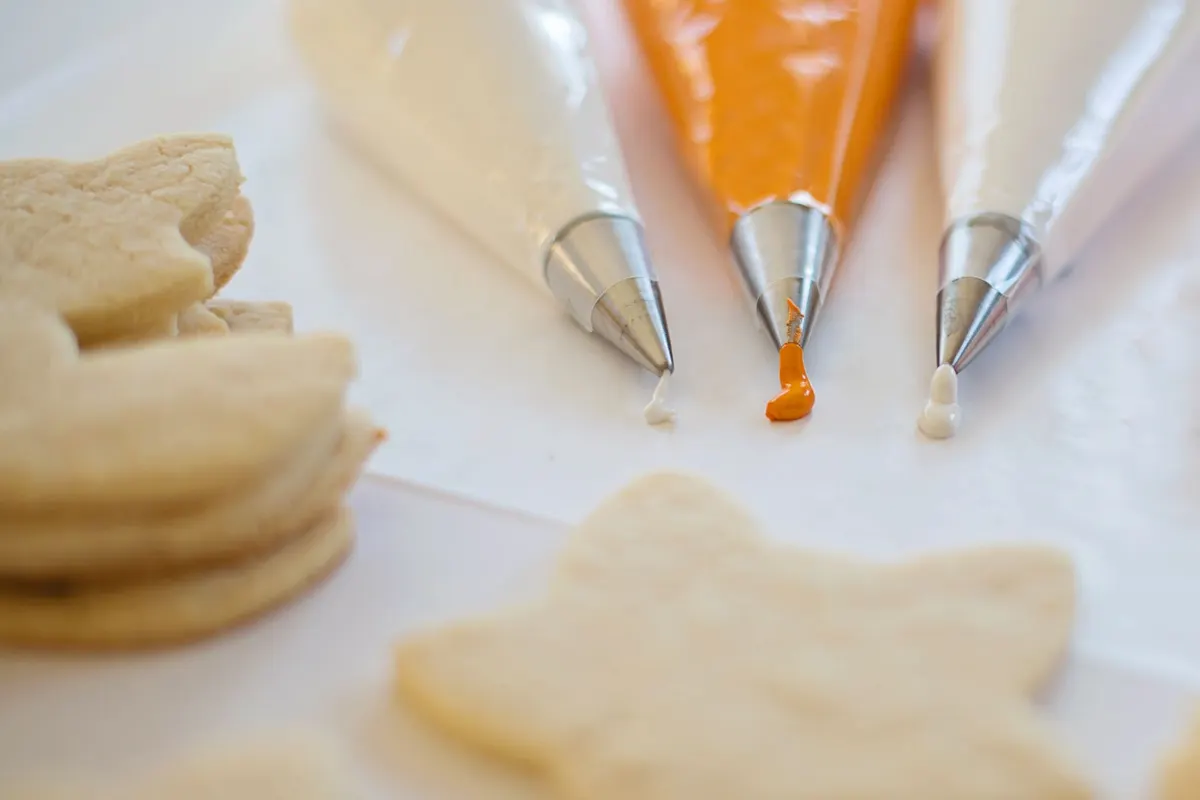
Three piping bags with silver tips, white and orange icing, and a stack of plain cookies. You need 3 bags for a house: stiff white for glue, medium white for detail, and one color for trim. A coupler lets you swap tips without changing bags. Keep the bags upright in tall glasses and cover each tip with a damp paper towel. Leftover royal icing keeps in an airtight container at room temperature for up to two weeks, and you re-whip it before use.
21. Centerpiece on a mirrored tray

A small house with a lattice roof on a mirrored tray, next to green goblets and a silver ball, turns a dinner table into a scene. Use a tray at least 4 inches wider than the house. Keep it 6 inches from taper candles or any open flame, and use a pretty plate under the house so crumbs and icing do not land on the tray. Surround it with a few ornaments and tuck the house between place settings only if you have room.
Final tips
- Buy 25 percent more candy than the list says, and a second batch of icing ingredients.
- Make icing, bake dough and build the shell a day ahead, so decorating day is only decorating.
- Match one idea to one candy palette of three or four colors.
- Label any house with allergen info if you take it to a party, including wheat, egg and any nut or milk warnings from the candy.
- If you are mixing styles, pick one ceiling for the whole table: either everything edible or everything display only.
- Display away from sun, heat and steam, and plan to toss it after the holidays.
Frequently asked questions
How much candy do you need to decorate one gingerbread house?
For a standard kit-size house, plan on about 2 to 3 cups of assorted candy for the roof, trim and yard, plus 1 cup of snow-type toppings like coconut or sprinkles. Kids use more because they snack. Buy a little extra, since gumdrops and mints vanish fast during a family decorating session.
What icing do you use to hold a gingerbread house together?
Stiff royal icing made with meringue powder. Wilton's recipe uses 4 cups of powdered sugar, 5 tablespoons of warm water and 3 tablespoons of meringue powder, beaten until it forms peaks. It dries hard, so it works as edible glue. Skip raw egg whites, which Wilton notes can be a food safety issue.
How far ahead can you decorate a gingerbread house?
Decorate walls flat, let the icing set at least 30 minutes, then assemble. Many bakers build the shell a day ahead so it is rock hard before the roof candy goes on. A finished house is a display piece, and Eater suggests it lasts several weeks in a cool, dry spot away from sunlight and moisture.
Are gingerbread houses safe for people with allergies?
Not automatically. Gingerbread dough usually contains wheat, and meringue powder is an egg product. Many candies and kits carry milk, soy, peanut or tree nut warnings. Read every label, check that the kit says whether it may contain traces, and keep an allergy-safe house separate if a guest is affected.
What can you use instead of a gingerbread house kit?
Graham crackers glued with stiff royal icing make a simple house in under an hour. Mini kits, house-shaped cookies and mug toppers are other options. All of them take the same icing and candy. Square cereal pieces make the roof, and pretzel sticks make fences and doors.
You might also like
 Christmas
Christmas Table Decor Ideas: 20 Linens, Runners & Centerpieces
 Christmas
Christmas Tree Decorating Ideas: 20 Looks by Theme and Color
 Christmas
24 Small Apartment Christmas Decor Ideas (Renter-Friendly)
 Thanksgiving
Friendsgiving Decor Ideas for Apartments, Buffets & Small Tables
 World holidays
Hanukkah Decorations: 20 Menorah, Table and Door Ideas
 Winter & New Year
New Year's Eve Party Decorations: 20 Ideas for Apartments