Hanukkah Decorations: 20 Menorah, Table and Door Ideas

Jump to an idea (20)
- Before you start
- 1. Make the menorah the dinner table centerpiece
- 2. Set the menorah in a street-facing window
- 3. Check the view from the sidewalk
- 4. Give everyone their own menorah
- 5. Bring out an heirloom silver menorah
- 6. Pick a ceramic menorah for an easy modern look
- 7. Try an oil menorah with glass cups
- 8. Add an electric menorah where flames are not allowed
- 9. Fill a vase with blue and white flowers
- 10. Scatter gelt down the table
- 11. Set out dreidels as table scatter
- 12. Serve sufganiyot as a dessert display
- 13. Bake blue and white decorated cookies
- 14. Hang a felt menorah banner on the front door
- 15. Make a blue and white Hanukkah wreath
- 16. Wrap a Star of David with greenery for the gate
- 17. Build a twig Star of David
- 18. Style a shelf around the menorah by day
- 19. String a paper Star of David garland across the window
- 20. Make a paper menorah craft with kids
- Final tips
These Hanukkah decorations start where the holiday does, with the menorah, and then move out to the table, the window, the front door and a kids' craft corner. Hanukkah 2026 begins at sundown on Friday, December 4, and ends at nightfall on Saturday, December 12, so you have eight nights of guests, latkes and candlelight to plan around.
Each idea comes with counts, sizes or a cost, plus a budget or DIY swap where it helps. Customs differ between families and communities, so treat the tradition notes as a starting point and follow your own practice. For other festivals of light and winter holidays, browse our world holidays ideas.
Before you start
A Hanukkah menorah, also called a hanukkiah, has nine branches: eight for the nights and one for the shamash, the helper candle that lights the rest. The shamash sits apart, usually higher or in the center. My Jewish Learning notes that candles go into the menorah from right to left but are lit from left to right, newest first. One menorah needs 44 candles for the full holiday, and most boxes hold 45.
Standard Hanukkah candles burn for roughly 30 minutes, according to Chabad. On Friday nights, December 4 and 11 this year, many families light before Shabbat with larger candles so they last. For safety, the U.S. Fire Administration advises keeping candles at least 12 inches from anything that can burn and never leaving them unattended.
1. Make the menorah the dinner table centerpiece
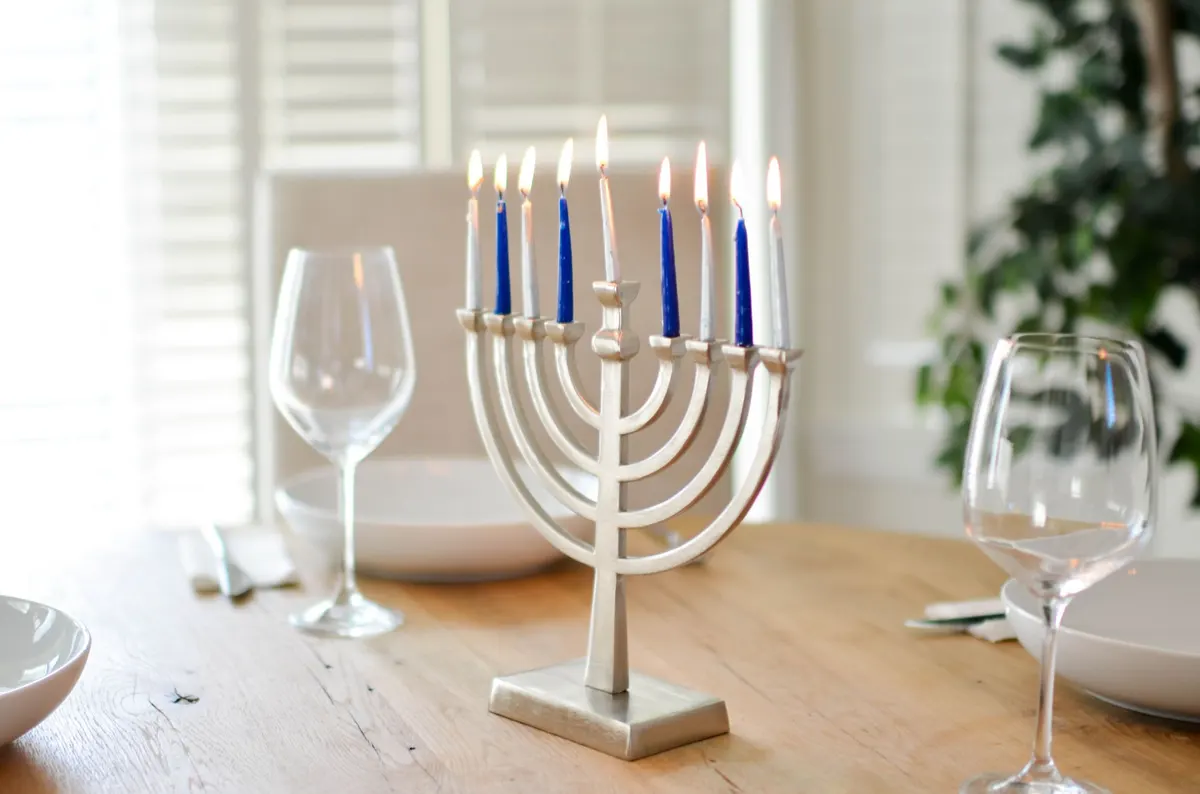
On nights when you host, let the menorah be the one tall thing on the table. A silver hanukkiah with mixed blue and white candles, a few wine glasses and plain white plates is plenty. Set it on a metal tray at least 10 inches wide to catch drips, and keep it at the end of the table rather than the middle so no one reaches across a flame for the latkes. Leave about 12 inches of clear space around it, with napkins and paper menus well away. Budget swap: a $5 thrifted silver tray does the same job as a new one.
2. Set the menorah in a street-facing window
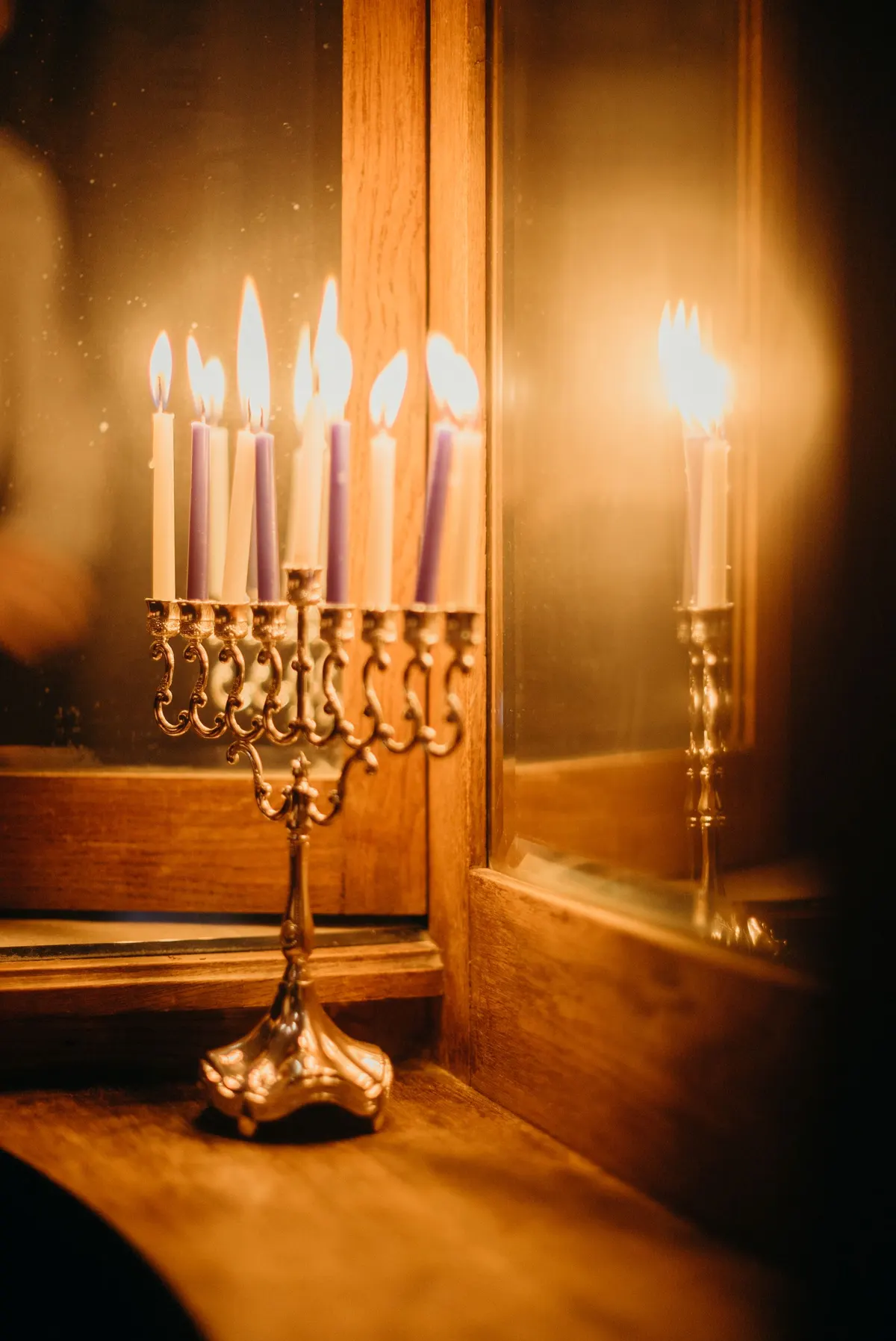
Placing the menorah in a window facing the street is a long-standing custom. The rabbis of the Talmud wanted the lights seen, which My Jewish Learning describes as publicizing the miracle. A deep windowsill works well, like the wooden sill here with a gold menorah of ivory and purple candles. Measure the sill first: many menorahs need 3 to 4 inches of depth and 12 to 16 inches of width. Tie back or remove curtains, lift blinds fully, and put a heatproof tile underneath. If the sill is shallow, push a narrow table against the window instead.
3. Check the view from the sidewalk
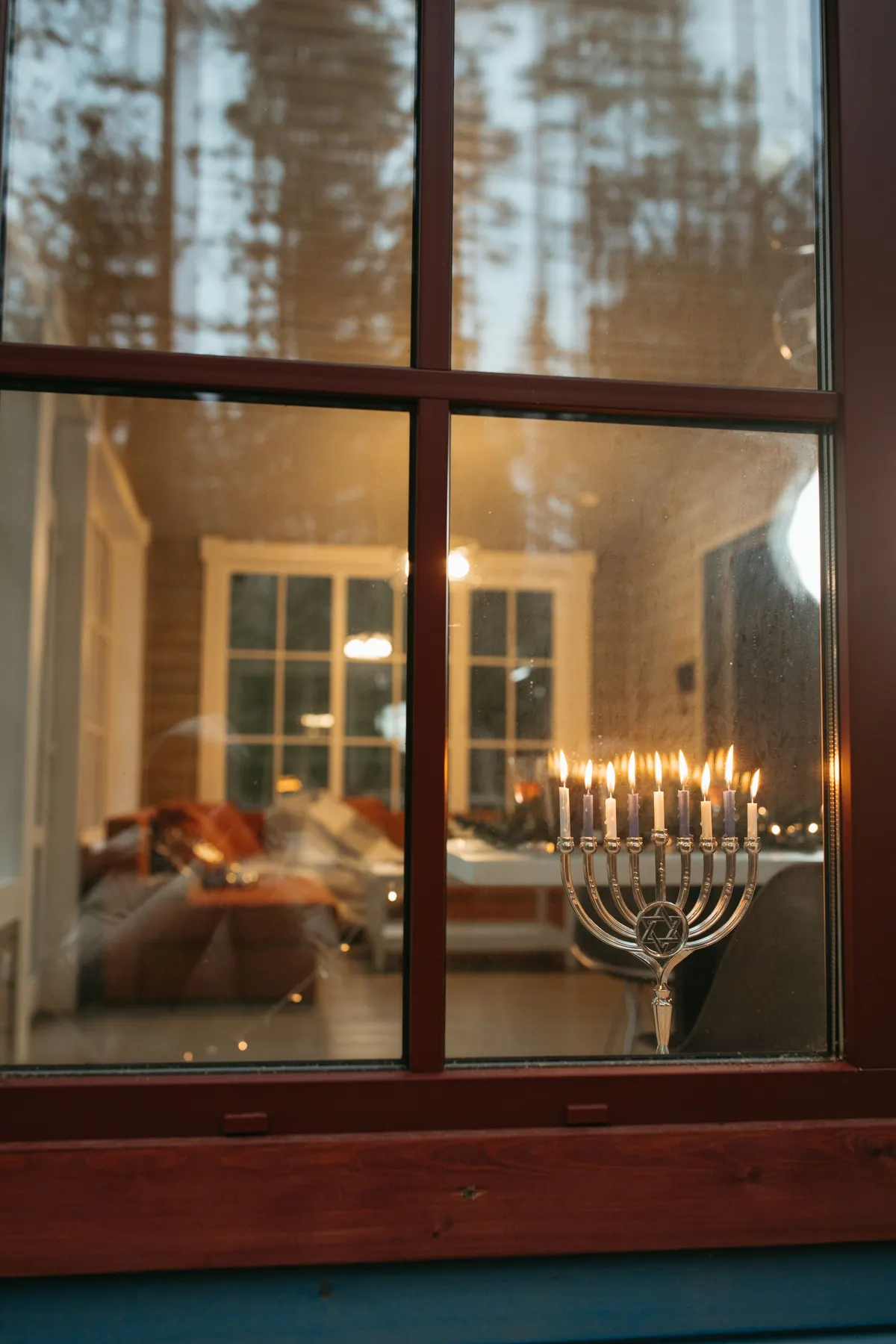
Once the menorah is in place, step outside on the first night and look back. From the street you see what neighbors see: the frame, the glass and the row of flames. This silver menorah with a Star of David at its center reads clearly because nothing sits in front of it. Clear the sill of plants and photo frames, and turn off any bright lamp directly behind it so the candles stay the brightest thing in the window. Chabad notes that a window menorah should sit no higher than about 29 feet above the street, so upper-floor apartments usually still count.
4. Give everyone their own menorah
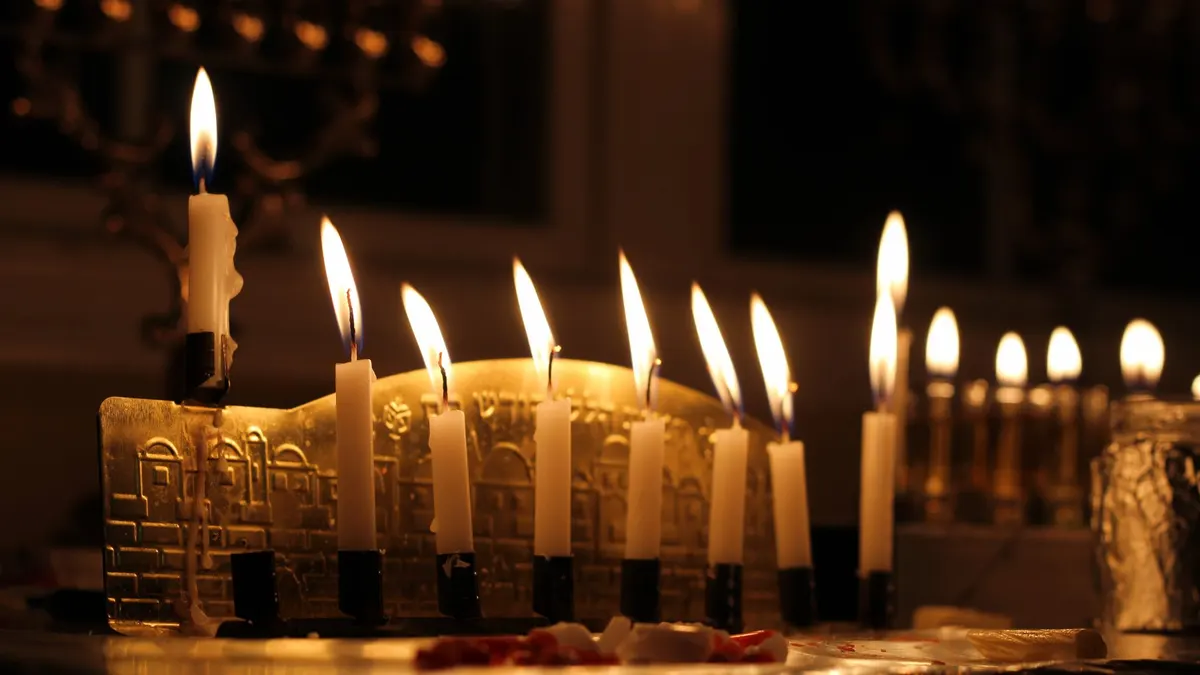
In many homes each family member lights a menorah, and Chabad encourages children to light their own. A row of several lit menorahs makes the brightest display you can create, like the gold menorahs glowing together here. Gather them on one large heatproof tray, about 18 by 24 inches, or on a sheet of aluminum foil over a sturdy table. Space them at least 4 inches apart so heat and wax do not pass between them. Kids can decorate their own simple menorahs earlier in the week. Keep the tray on a stable surface that pets and toddlers cannot reach.
5. Bring out an heirloom silver menorah
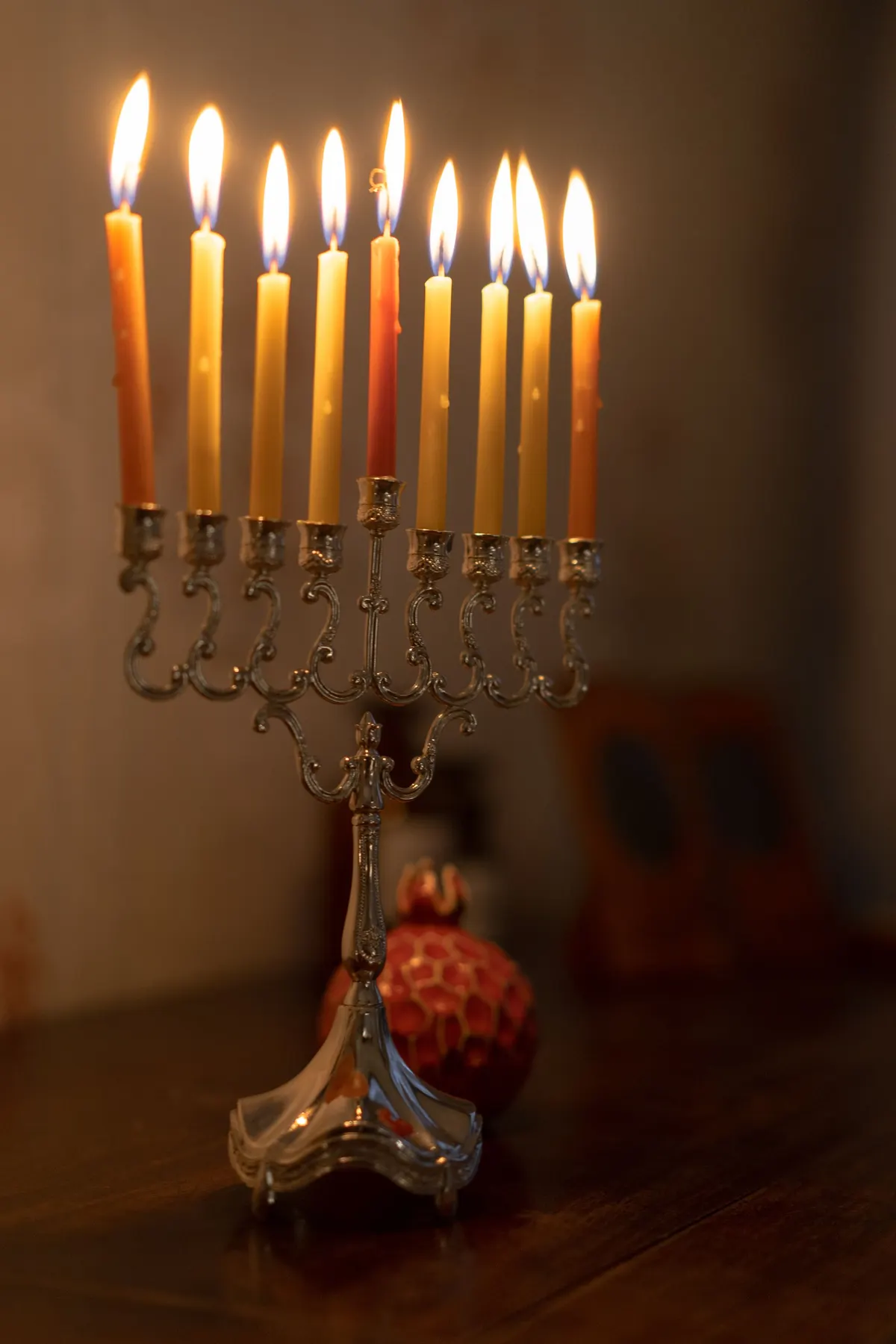
An ornate silver menorah is often a family piece passed down, and it deserves a dark, plain background. This one holds yellow and orange candles with a raised red shamash in the center, set on dark wood. Polish it a few days before December 4 with a soft cloth, and line the cups with a thin layer of foil or wax liners so drips lift out cleanly. Do not polish it right after lighting while the metal is warm. If you are short on candles, use the mixed colors from a standard box. Many boxes come in assorted colors, and mixing them looks deliberate.
6. Pick a ceramic menorah for an easy modern look
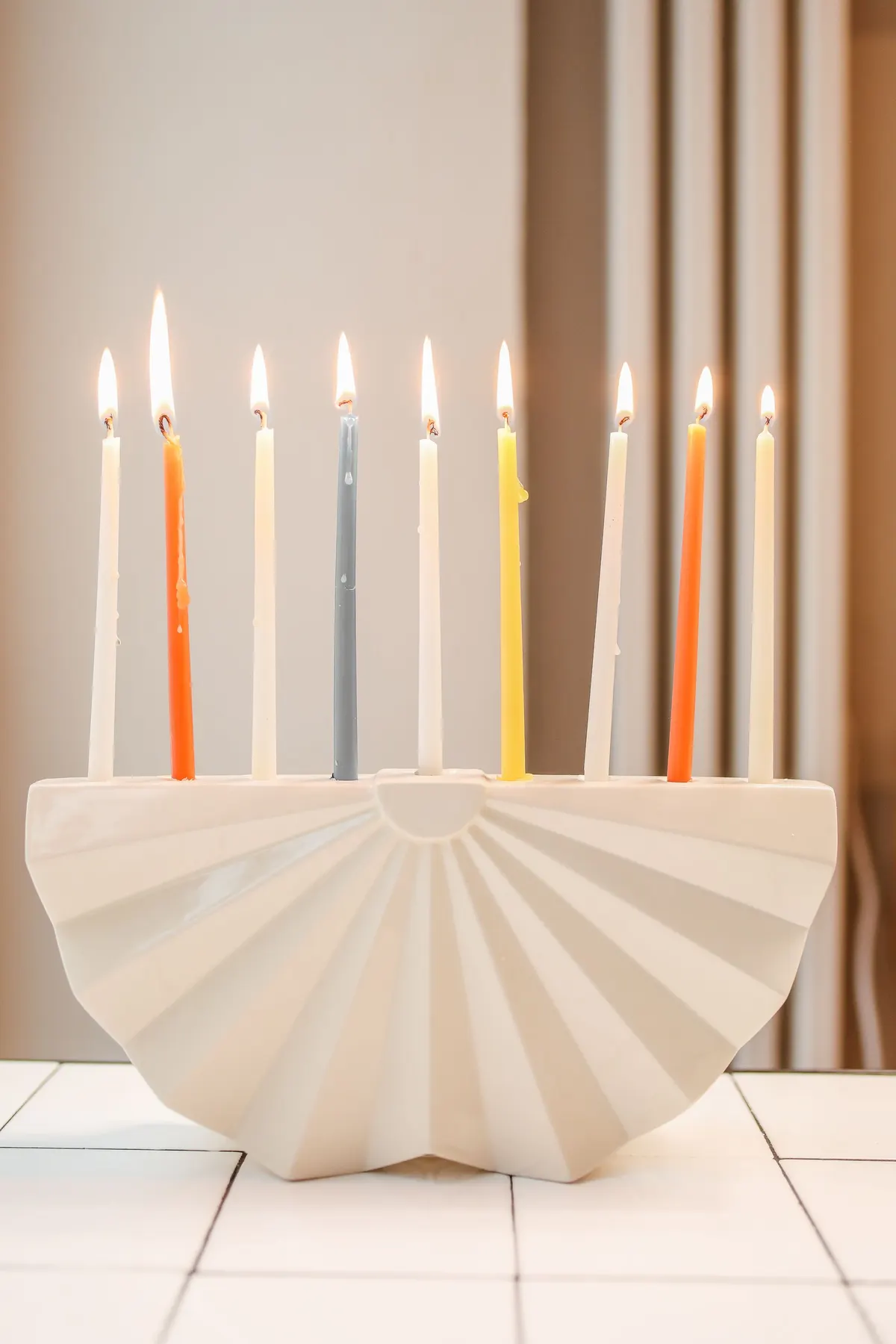
A white ceramic menorah suits a modern kitchen or a small apartment. This fan-shaped, fluted one holds nine slim candles in ivory, orange, yellow and blue, and the white tiles under it make a smart, heatproof base. Ceramic menorahs often cost less than silver, and many local Judaica shops and craft fairs sell handmade versions. Set it on a 6-inch ceramic tile if your counter is wood or laminate. Clean old wax out with a butter knife after the candles cool, or pop the menorah in the freezer for an hour so the wax shrinks and slips out.
7. Try an oil menorah with glass cups
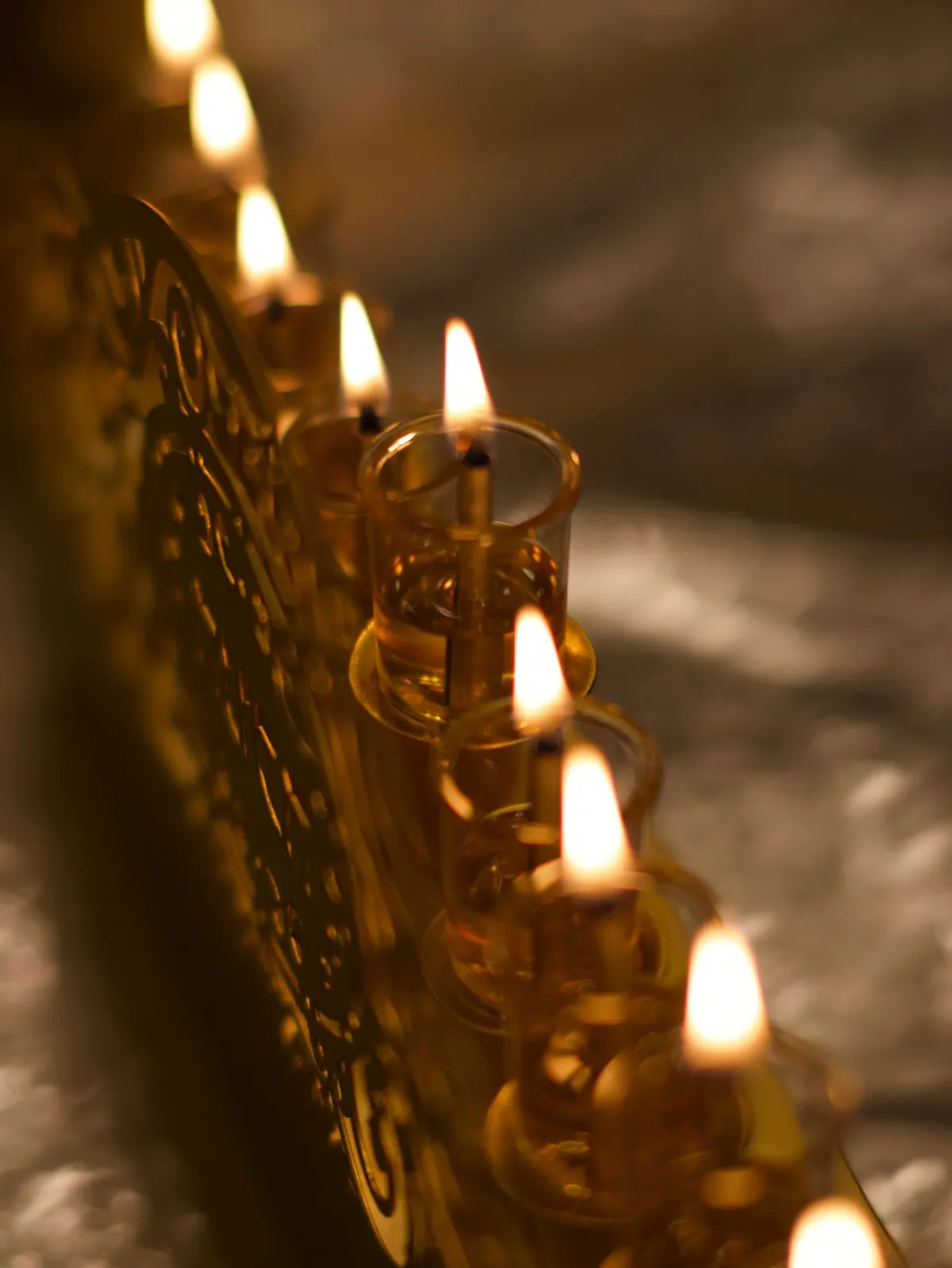
Chabad describes cotton wicks in olive oil as the most ideal way to light, and many families find an oil menorah moving because the Hanukkah story centers on oil. This gold menorah holds nine clear glass cups of amber oil. Fill each cup with enough oil to burn at least 30 minutes past nightfall, and use ready-made glass cups with floating wicks if your menorah takes them. Set it on a foil-lined tray, as shown, since oil can spill. A 16-ounce bottle of olive oil usually covers several nights, depending on your cup size. Keep the oil bottle capped and away from the flames.
8. Add an electric menorah where flames are not allowed
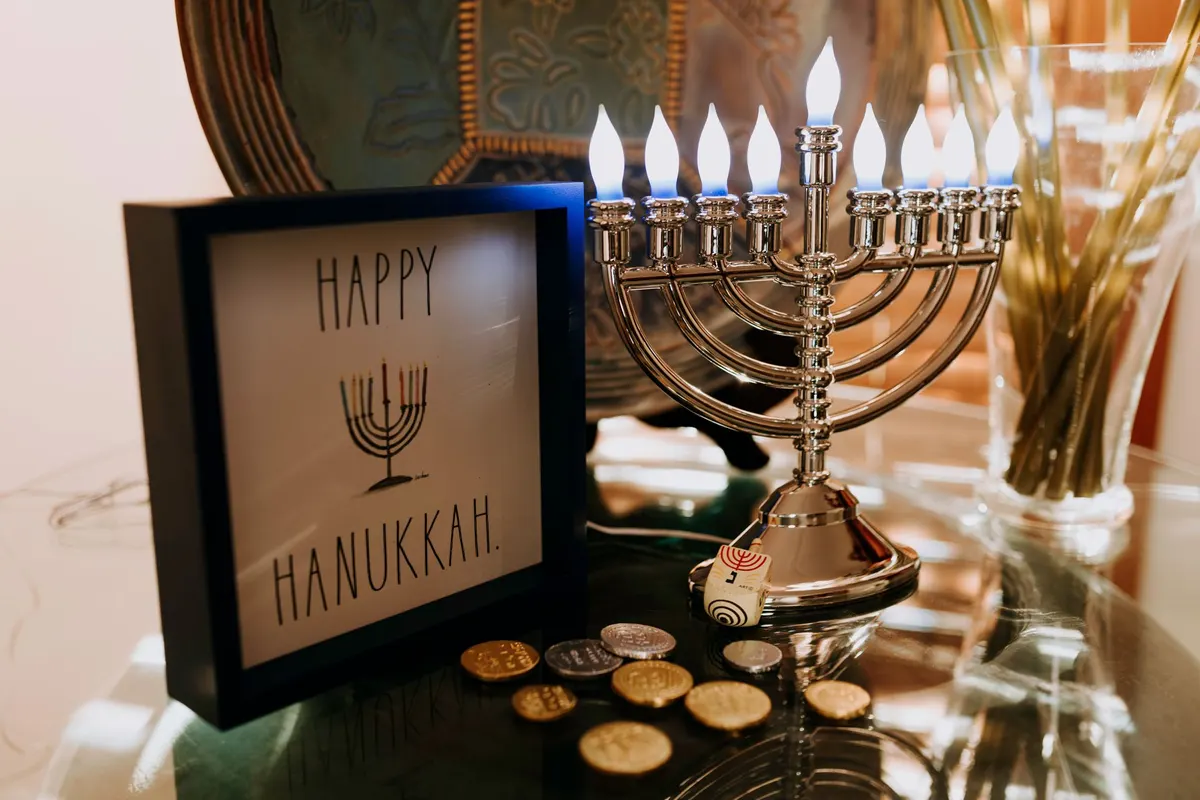
Dorms, offices and some rentals ban open flames. An electric menorah with nine flame-shaped bulbs gives you a glow in the window all evening, like this silver one beside a framed greeting, a dreidel and coins. Many authorities, including Chabad, say electric lights do not count for the lighting itself, so plenty of families keep one as extra decor and still light candles elsewhere. If flames are not possible, ask your rabbi. Look for one with a switch for each bulb so you can add a light each night. Most run on batteries or plug in, and a timer saves you from forgetting it.
9. Fill a vase with blue and white flowers
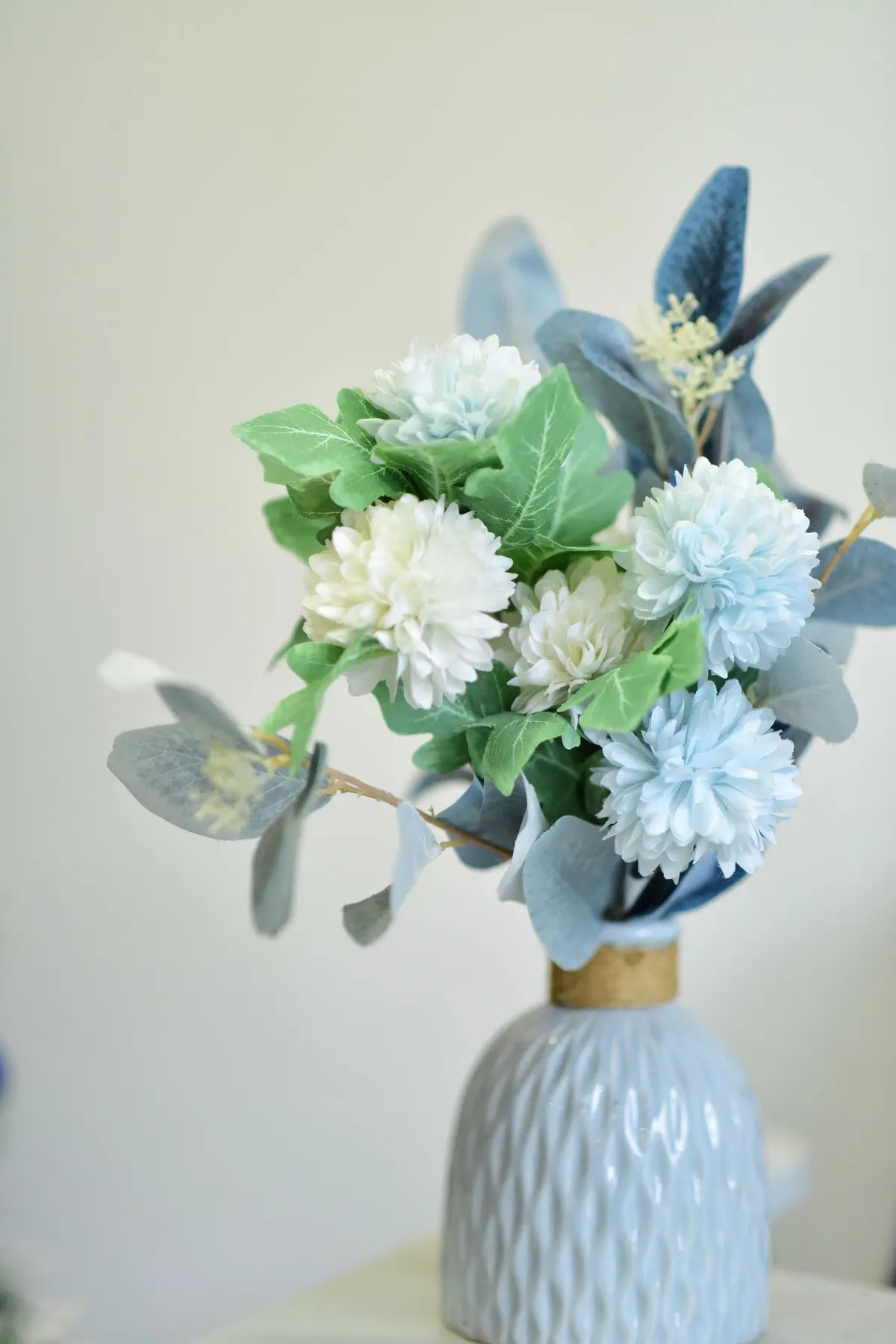
Blue and white are the colors most people link with Hanukkah, and a vase of flowers is the easiest way to bring them in. This pale blue textured vase with a gold band holds white and light blue blooms with gray-green foliage. At the grocery store, look for white roses, white or blue hydrangea, delphinium or dyed carnations, plus a few stems of eucalyptus. Keep the arrangement under 10 inches tall so it does not block faces. Two $10 bunches split into small jars cover a long table. Keep flowers and foliage well away from the menorah, ideally at the other end of the table.
10. Scatter gelt down the table
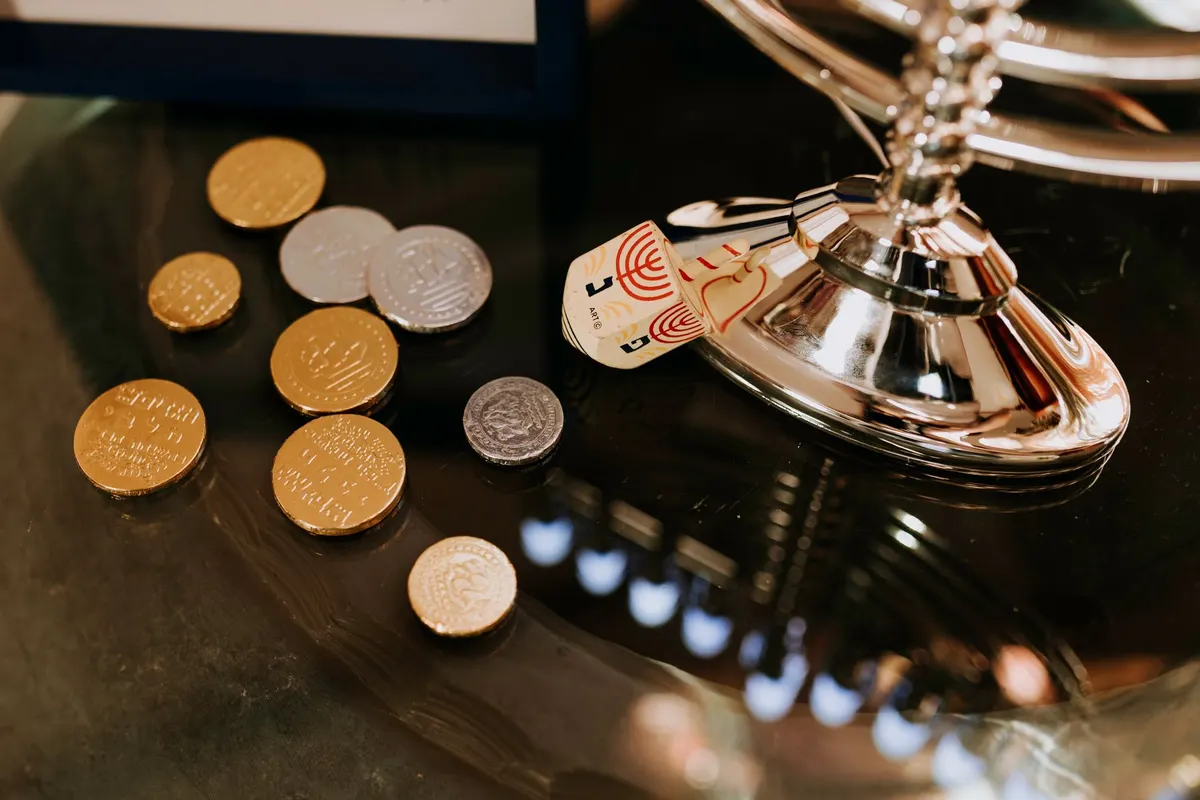
Hanukkah gelt, chocolate coins in gold and silver foil, is one of the cheapest table decorations there is. A mix of gold and silver coins around a dreidel on a dark surface looks more polished than you would expect. Buy two or three mesh bags, about 25 coins total for a table of eight, and scatter them in small clusters of five or six along the runner. Kids can play for them later. Use a dark tablecloth or runner so the foil catches the candlelight. Keep the chocolate away from the menorah and any warm serving dishes, since it softens quickly near heat.
11. Set out dreidels as table scatter
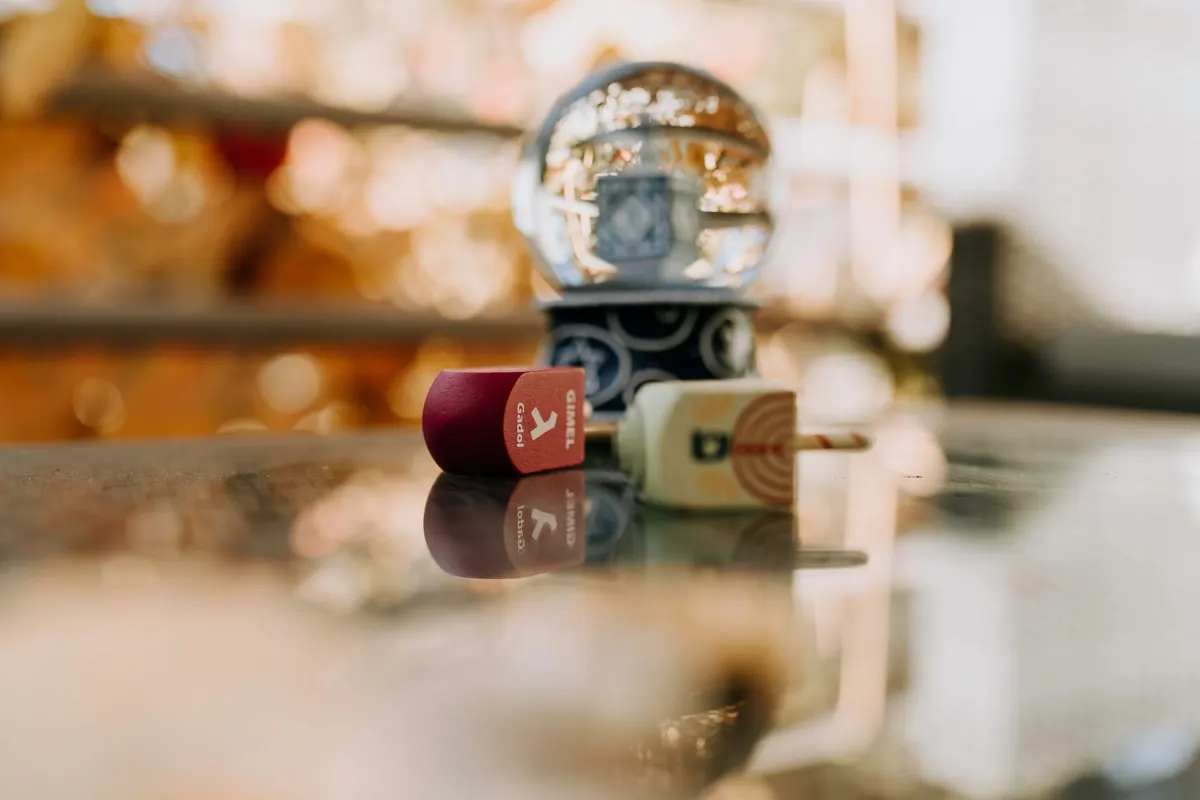
A dreidel is a four-sided spinning top. My Jewish Learning explains that its Hebrew letters, nun, gimel, hei and shin, stand for a phrase meaning "a great miracle happened there," and dreidels in Israel use pe for "here." A burgundy and a cream dreidel beside a snow globe make a small, playful corner. Set two or three dreidels at each end of the table, or one at each place setting as a favor, and keep a bowl of gelt nearby for the game. Wooden dreidels cost about $1 to $2 each, and plain ones can be painted blue and white in an afternoon.
12. Serve sufganiyot as a dessert display
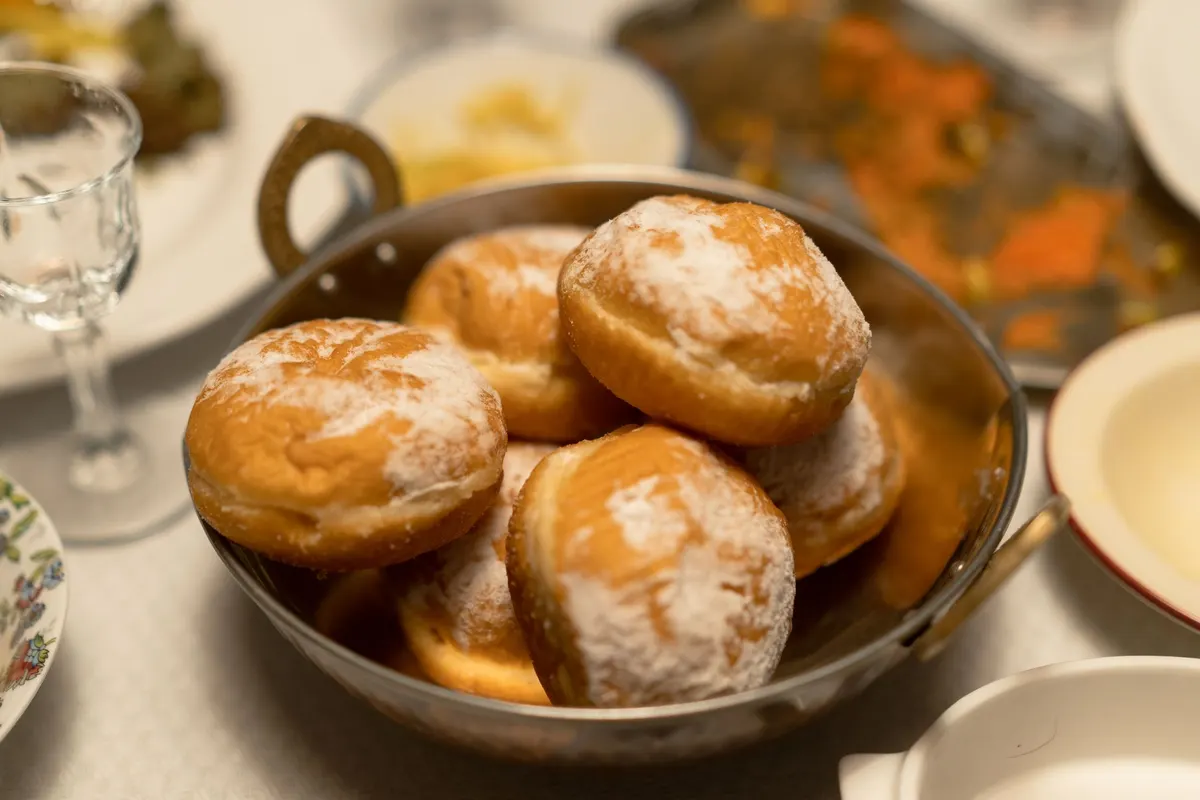
Fried foods are a Hanukkah tradition, and sufganiyot, filled doughnuts dusted in sugar, are a favorite in many homes. A mound of powdered doughnuts in a round metal pan reads as both dessert and decor. Use a footed pan or a cake stand about 10 inches across, pile a dozen doughnuts in a loose pyramid, and dust them with extra powdered sugar just before guests arrive. Set the dessert table away from the menorah so guests are not reaching near a flame. Bakery doughnuts cost far less than a decorated cake, and you can buy plain ones and fill them yourself with jam.
13. Bake blue and white decorated cookies
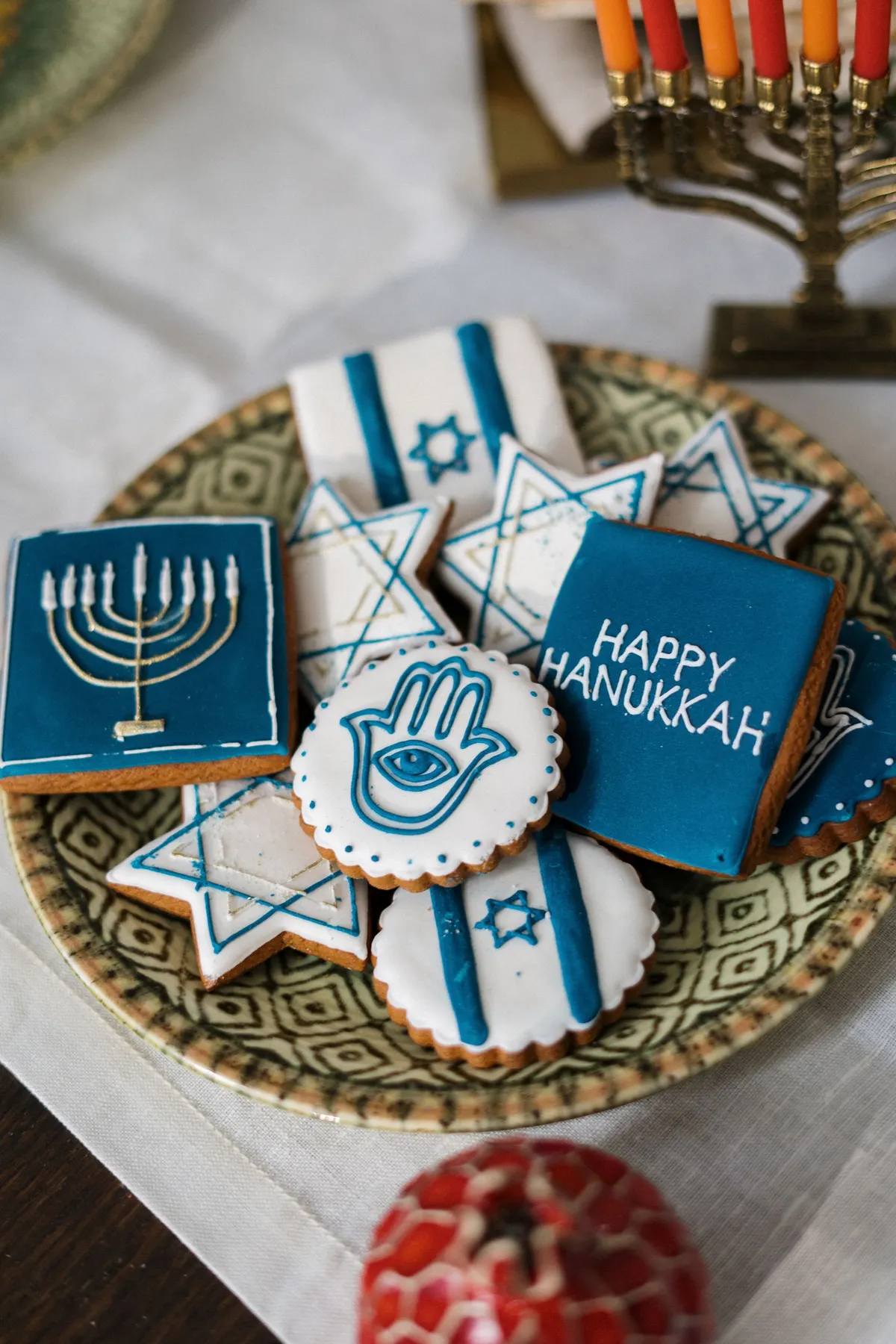
Iced sugar cookies are decor you can eat, and they double as an afternoon project with kids. These blue and white cookies show stars, a hand shape and a menorah, set out on a patterned plate beside a pomegranate. Use a star cutter and a simple menorah template cut from cardboard, and plan on about 24 cookies from one batch of dough. Pipe white royal icing for outlines and flood with blue. Let them dry for at least 6 hours before stacking. Wrap a few in clear bags with blue ribbon and hand them out as party favors.
14. Hang a felt menorah banner on the front door
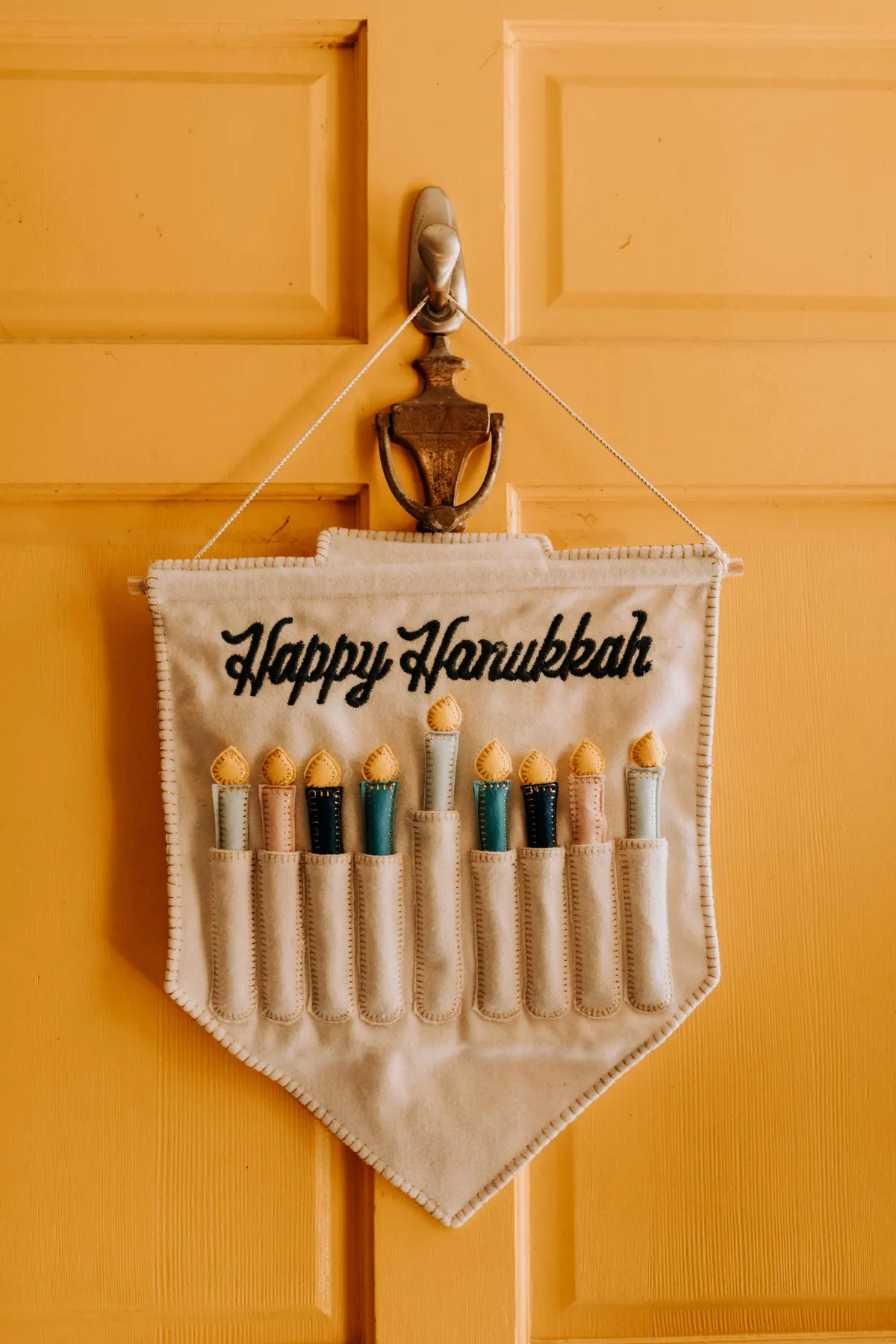
A felt menorah banner turns the front door into a countdown. This cream banner hangs from a cord under the door knocker, with nine felt candles in pale blue, pink, teal and black, each topped with a yellow felt flame. Make your own from a 12 by 18 inch piece of felt, nine felt candle strips and nine flames stuck on with hook-and-loop dots. Kids can add one flame each night, with the shamash in the center. An over-the-door hook means no nails. Felt sheets cost under $1 each at craft stores, so the whole project comes in around $10.
15. Make a blue and white Hanukkah wreath
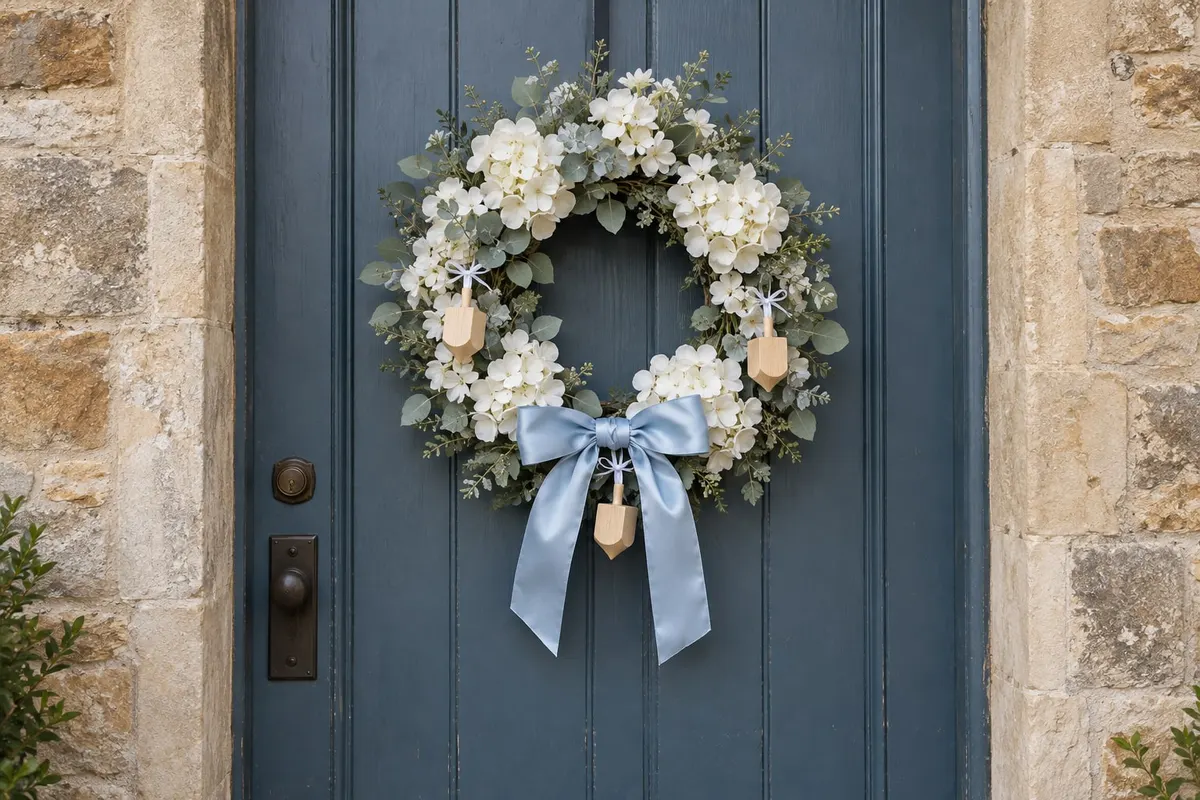
A Hanukkah wreath is not a traditional Jewish decoration, and some families skip it because wreaths read as Christmas decor. Others like a door piece in Hanukkah colors. This one uses white flowers, eucalyptus, a pale blue bow and three small wooden dreidels. Start with an 18 to 20 inch grapevine or foam wreath, tuck in faux white hydrangea and eucalyptus stems, and tie on two or three dreidels with thin white ribbon. Skip pine and red berries if you want it to look clearly different from Christmas. Expect to spend about $25 to $35 for supplies at a craft store.
16. Wrap a Star of David with greenery for the gate
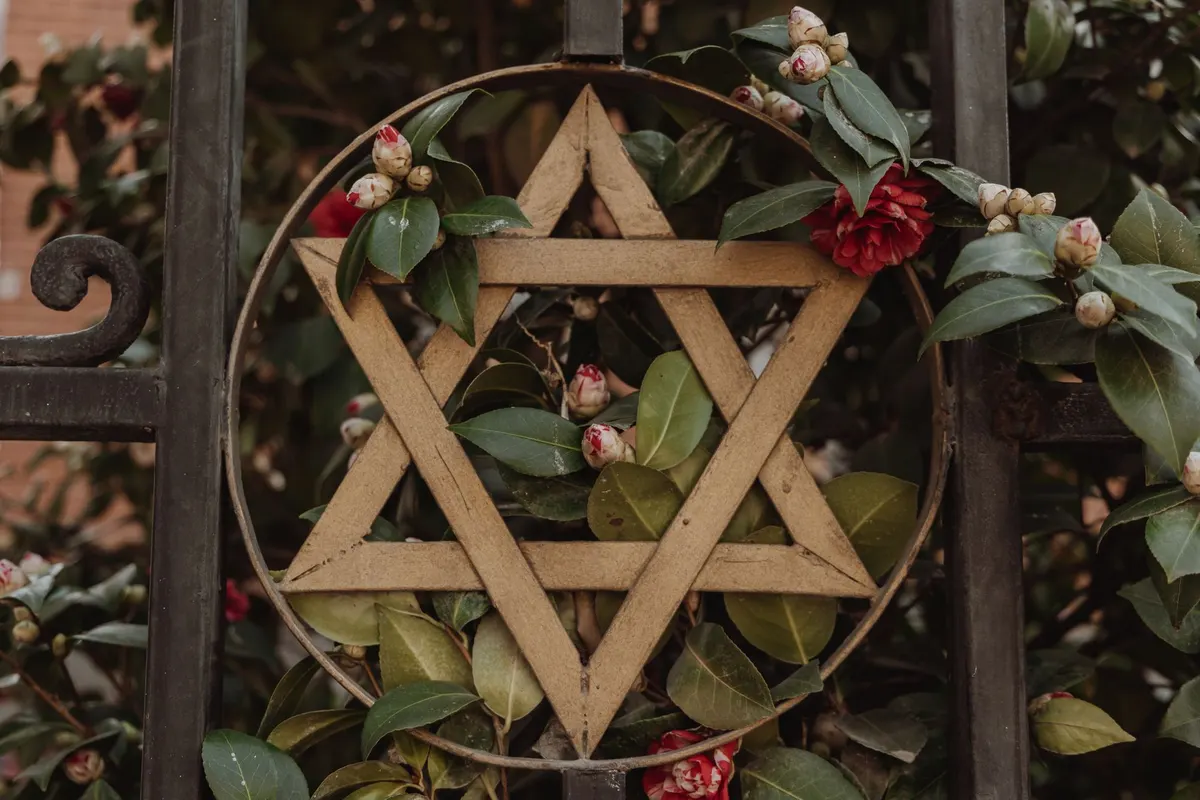
The Star of David is a Jewish symbol year-round rather than a Hanukkah-specific one, but many families add it to their decorations. This tan wooden star sits in a thin round frame on an iron gate, wrapped with green leaves and small red flowers. Cut a 12-inch star from two wooden triangles or buy a plain wooden one, then wire on faux ivy and a few silk blooms in white or blue. Zip ties hold it to a gate or porch rail without drilling. Use faux greenery outdoors, since fresh leaves brown quickly in December weather.
17. Build a twig Star of David
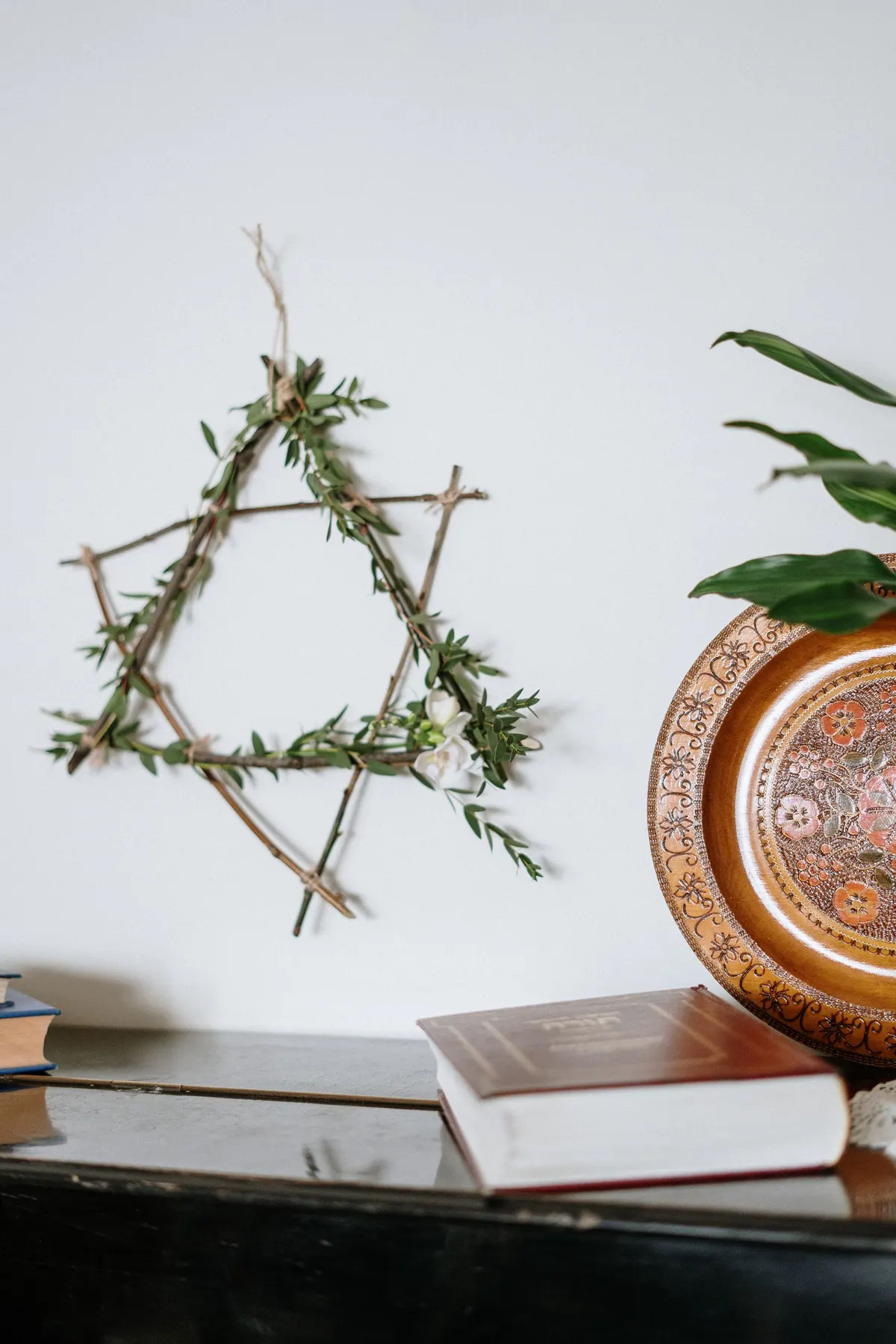
A twig star is a free DIY decoration. Gather six straight sticks about 12 inches long and the same thickness. Make two triangles with three sticks each, tie the corners with twine or thin wire, then lay one triangle over the other, point down, and tie them where they cross. Tuck in a few leaves and small white flowers, as on this star hanging above books and a copper plate. Hang it with a removable adhesive hook on a wall or over a mirror. It takes about 30 minutes, and the only cost is twine. Keep it well away from any open flame.
18. Style a shelf around the menorah by day
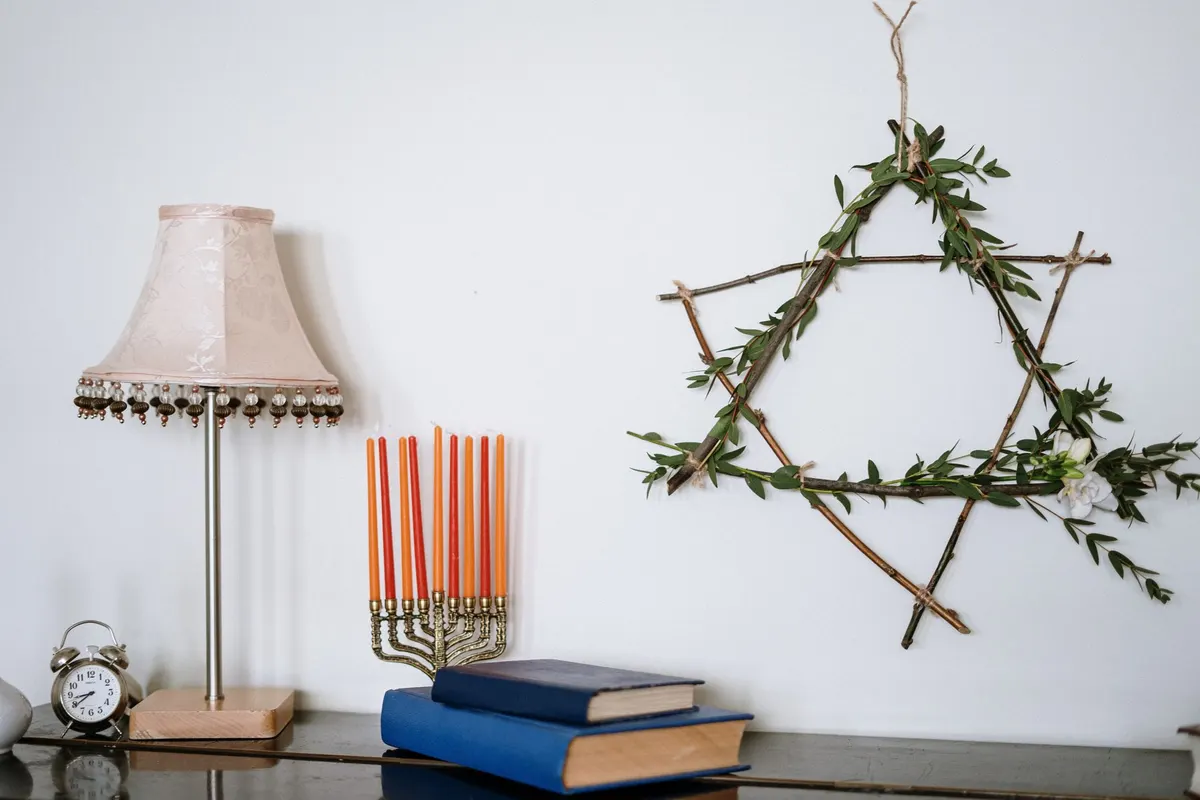
During the day an unlit menorah becomes part of a small display. Here a brass menorah with orange and red candles shares a dark cabinet with stacked blue books, a fringed lamp and a clock, and a twig star hangs on the wall above. Pick a shelf or console about 30 to 36 inches high, put the menorah on one side and two or three objects on the other, and leave a hand's width between them. Clear anything that can burn, like books and paper, before you light, since shelves under cabinets or wall hangings trap heat. Light it on a table if the shelf is crowded.
19. String a paper Star of David garland across the window
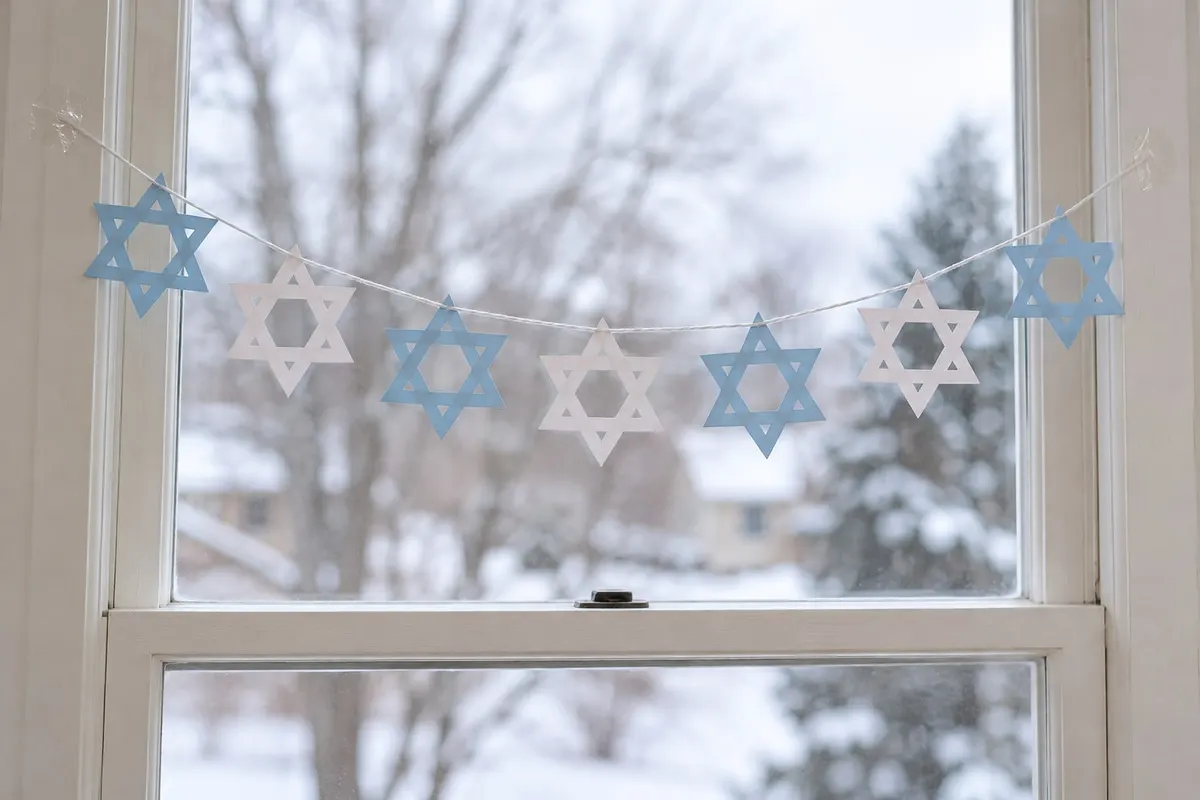
A paper star garland gives the window color all day, when the candles are not lit. Cut seven 4-inch six-pointed stars from light blue and white cardstock, punch a hole in the top point of each, and thread them on white string or baker's twine about 6 inches apart. Tape the ends to the top of the window frame with removable tape. A free template, a pencil and scissors are all you need. Hang it high, at least a foot above the sill, so the paper stays well clear of a menorah lit below. A 10-sheet cardstock pack costs about $5.
20. Make a paper menorah craft with kids
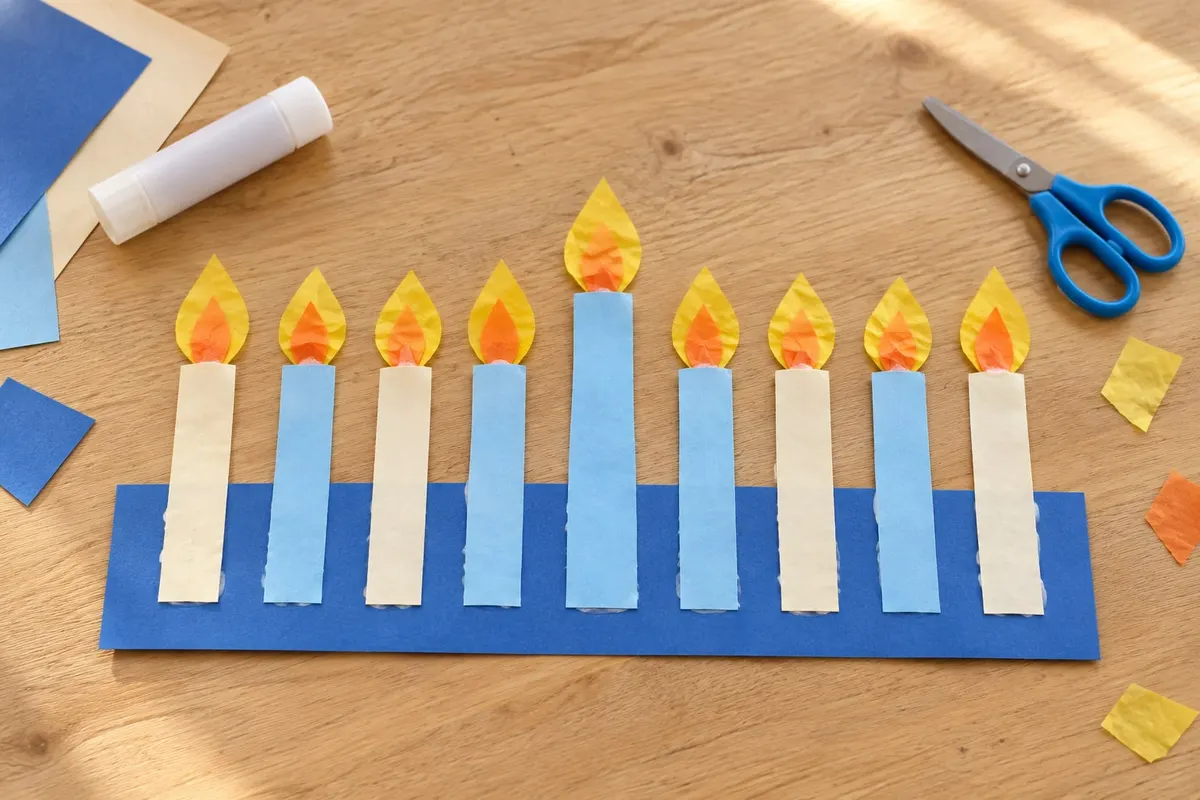
A paper menorah teaches the setup while it decorates the fridge or the kids' table. Glue a 12-inch strip of blue construction paper to the bottom of a sheet as the base. Add nine paper candle strips in a straight row: eight the same height and one taller shamash in the center. Top each with a tissue-paper flame in yellow and orange. Kids under five can use glue sticks and pre-cut pieces. Each finished menorah takes about 20 minutes and costs pennies. Older kids can add one paper flame per night, right to left, for a hands-on countdown.
Final tips
- Light on a heatproof surface at least 12 inches from curtains, paper and greenery, and never leave candles unattended.
- Buy one box of 44 or more candles per menorah, plus longer candles for Friday nights.
- Keep a blue, white and silver palette, and let the menorah stay the brightest thing in the room.
- For more hosting layouts, see our table decor ideas and porch and door ideas, or plan another festival of lights with our Diwali decor ideas.
Frequently asked questions
When is Hanukkah in 2026?
Hanukkah 2026 begins at sundown on Friday, December 4, and ends at nightfall on Saturday, December 12, according to Hebcal. The first candle is lit on the evening of December 4. Because that is a Friday, many families light before sundown and before Shabbat candles, using candles long enough to last into the night.
How many candles does a Hanukkah menorah have?
A Hanukkah menorah, or hanukkiah, has nine branches: eight for the nights of the holiday and one for the shamash, the helper candle used to light the others. The shamash sits apart, usually higher or in the center. Lighting every night with one menorah takes 44 candles, and most boxes hold 45.
Where should you put your menorah?
Many families set the menorah in a window facing the street, a custom tied to sharing the miracle publicly. Others, including Chabad households, place it in a doorway opposite the mezuzah. Wherever it goes, use a sturdy, heatproof surface away from curtains and out of reach of young children and pets.
Is a Hanukkah wreath traditional?
Not really. Wreaths are not a traditional Jewish symbol, and some families avoid them because they read as Christmas decor. Others like a door piece in blue, white and silver with dreidels or a Star of David. If you want something more traditional, a felt menorah banner or a simple greeting sign works well.
Can you use an electric menorah?
As decoration, yes, and it is a safer choice where open flames are not allowed. For the lighting itself, many authorities, including Chabad, say the lights should be candles or oil, not electric bulbs. If open flame is not possible where you live, ask your rabbi what your community recommends.
You might also like
 World holidays
20 Diwali Decoration Ideas for Your Home
 World holidays
Lunar New Year Decorations: 20 Ideas for 2027, Year of the Goat
 Valentine's
Valentine's Day Decor Ideas: 21 Easy Looks for Every Room
 World holidays
Kwanzaa Decorations: 20 Ideas for the Kinara, Table & Home
 Thanksgiving
Friendsgiving Decor Ideas for Apartments, Buffets & Small Tables
 Christmas
Gingerbread House Ideas: 21 Decorating Styles With Candy Counts