Kwanzaa Decorations: 20 Ideas for the Kinara, Table & Home

Jump to an idea (20)
- Before you start
- 1. Set up the kinara with the candles in the right order
- 2. Lay the mkeka down first
- 3. Choose a kinara that fits your table
- 4. Build a simple board kinara
- 5. Line up seven glass holders on a console
- 6. Fill a tray with mazao
- 7. Group the mazao with the kinara
- 8. Set out muhindi for the children
- 9. Choose one kikombe cha umoja
- 10. Hang the bendera near the kinara
- 11. Put up a Nguzo Saba poster
- 12. Run a striped runner in the Kwanzaa colors
- 13. Hang bunting and streamers in black, red and green
- 14. Dress the Karamu table for December 31
- 15. Plan zawadi with a book and a heritage symbol
- 16. Wrap gifts in fabric and make your own tags
- 17. Hang woven baskets and plates on a wall
- 18. Display a drum or a piece of art
- 19. Make a paper kinara with the kids
- 20. Weave a paper mkeka
- Final tips
These Kwanzaa decorations are for families setting up a kinara for the first time and for hosts who want the week of December 26 to January 1 to look intentional, from the candle table to the Karamu feast. The ideas start with the seven symbols, then move to color, the feast table, gifts and kids' crafts.
Symbol meanings come from the official Kwanzaa website, kwanzaa.org, writings by Kwanzaa's creator Dr. Maulana Karenga, and the Smithsonian's National Museum of African American History and Culture. Each idea gives counts or sizes and a handmade option. For more holidays, browse our world holidays decor ideas.
Before you start
Kwanzaa was created in 1966 by Dr. Maulana Karenga and the organization Us. It is a cultural holiday, not a religious one, and its name comes from the Swahili phrase "matunda ya kwanza," or "first fruits." Each of its seven days is tied to one of the Nguzo Saba, the Seven Principles.
The official Kwanzaa website asks you to pick a central place in your home for the symbols, choose the best items you can, such as African cloth and fresh produce, and not mix Kwanzaa symbols with another holiday's decor. Handmade pieces fit the tradition, since Kuumba (creativity) is one of the principles.
1. Set up the kinara with the candles in the right order
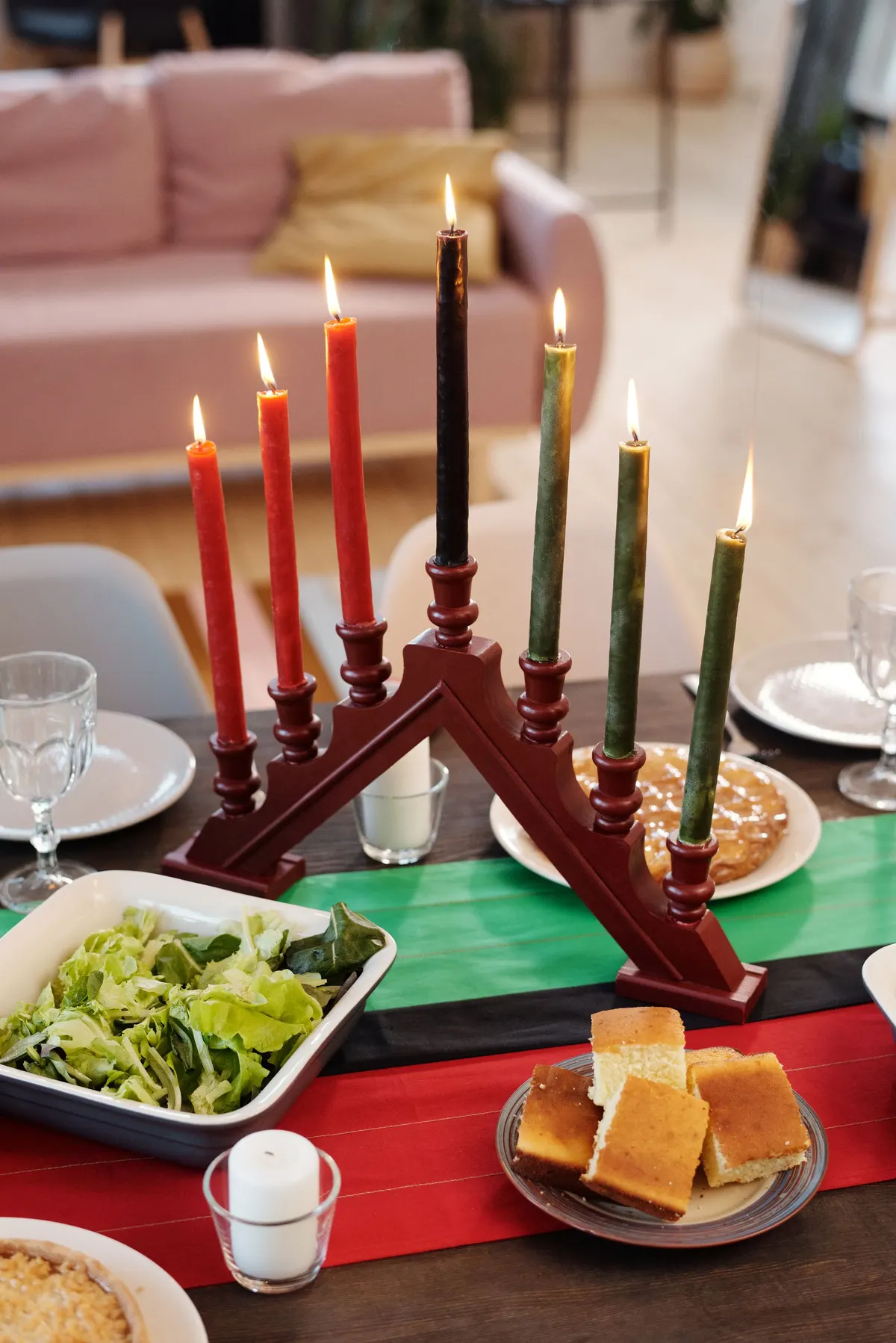
The kinara and the mishumaa saba (seven candles) are the center of the display. The official Kwanzaa website gives the order. The one black candle goes in the middle and stands for Umoja (unity). The three red candles go to its left and the three green to its right. The table in this photo shows exactly that, with all seven lit above a striped red, black and green runner. The black candle is lit first, on December 26. The site says the rest follow from left to right on the days after, one new candle each day. Never leave the kinara burning unattended, and check your lease for any open-flame rules.
2. Lay the mkeka down first
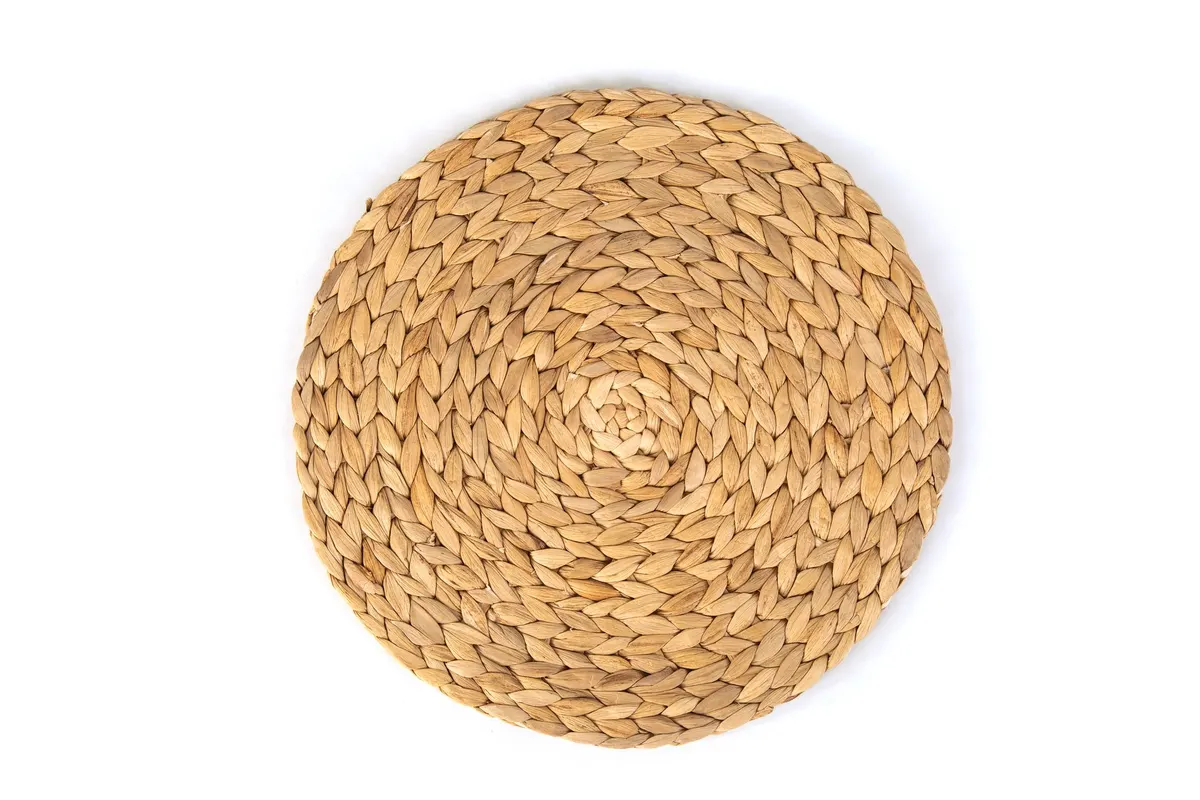
The mkeka (mat) stands for tradition and history, the foundation the other symbols rest on. The official Kwanzaa website describes the order: spread a beautiful piece of African cloth on the table, lay the mkeka on top, then place the kinara and the other symbols on it or right beside it. A round woven mat like this one works if it is at least 15 inches across, enough for a kinara and a small fruit bowl. Straw is the traditional choice. Some Kwanzaa guides say a cloth mat in an African print works if you can't find straw. Because straw catches fire easily, set a ceramic tile under the kinara so dripping wax and flames stay clear of the weave.
3. Choose a kinara that fits your table
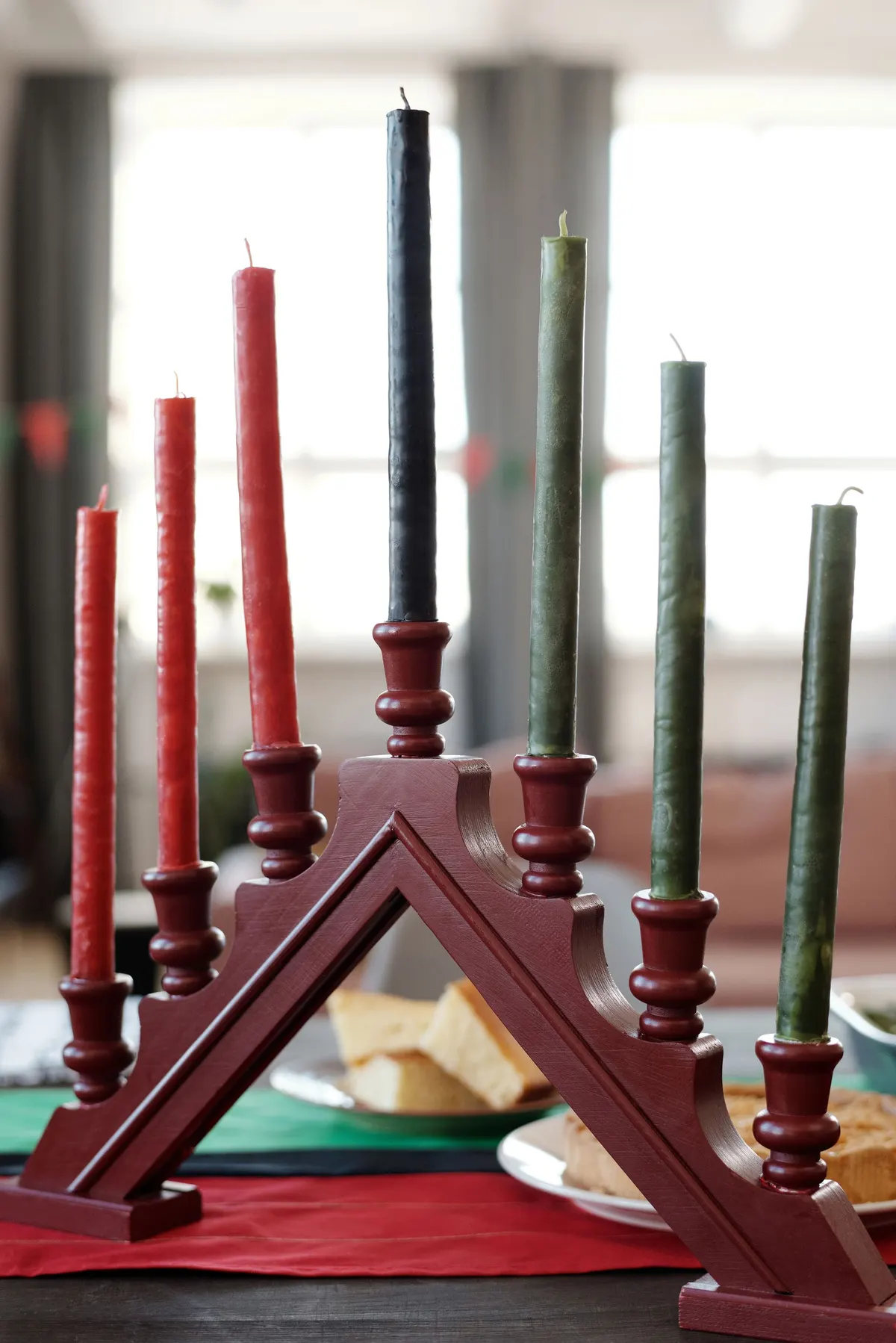
The kinara symbolizes roots, which Karenga describes as continental African ancestors. Kinaras come in many shapes. This one is a peaked wooden frame with stepped sockets, three on each side and one at the top for the black candle. Measure first: a kinara 14 to 18 inches wide leaves room for the mazao and unity cup on a standard mat. Take your kinara along when you buy candles, or check its socket size, because some take slim tapers and others need thicker candles. The striped green, black and red cloth under this one shows how a simple runner can carry the colors.
4. Build a simple board kinara
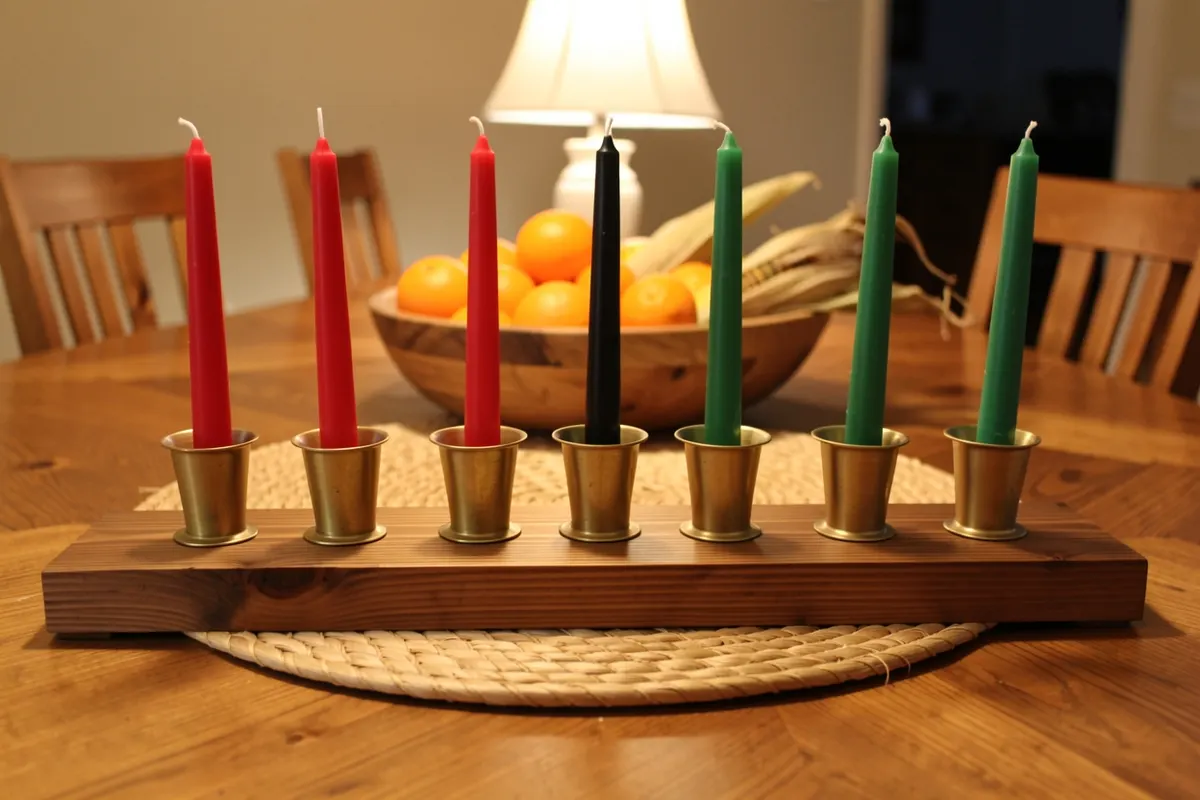
A straight board works too. One widely shared Kwanzaa guide suggests a 2x4 or a piece of driftwood with screw-in candle cups from a hardware store. Cut a board about 18 inches long, sand it, and stain or paint it. Mark seven evenly spaced holes about 2 inches apart, then screw in seven metal candle cups. Set three red candles on the left, the black in the center and three green on the right. Keep the board on a heat-safe tile on top of your mat. Making the kinara yourself is a practical way to put Kuumba into the display.
5. Line up seven glass holders on a console
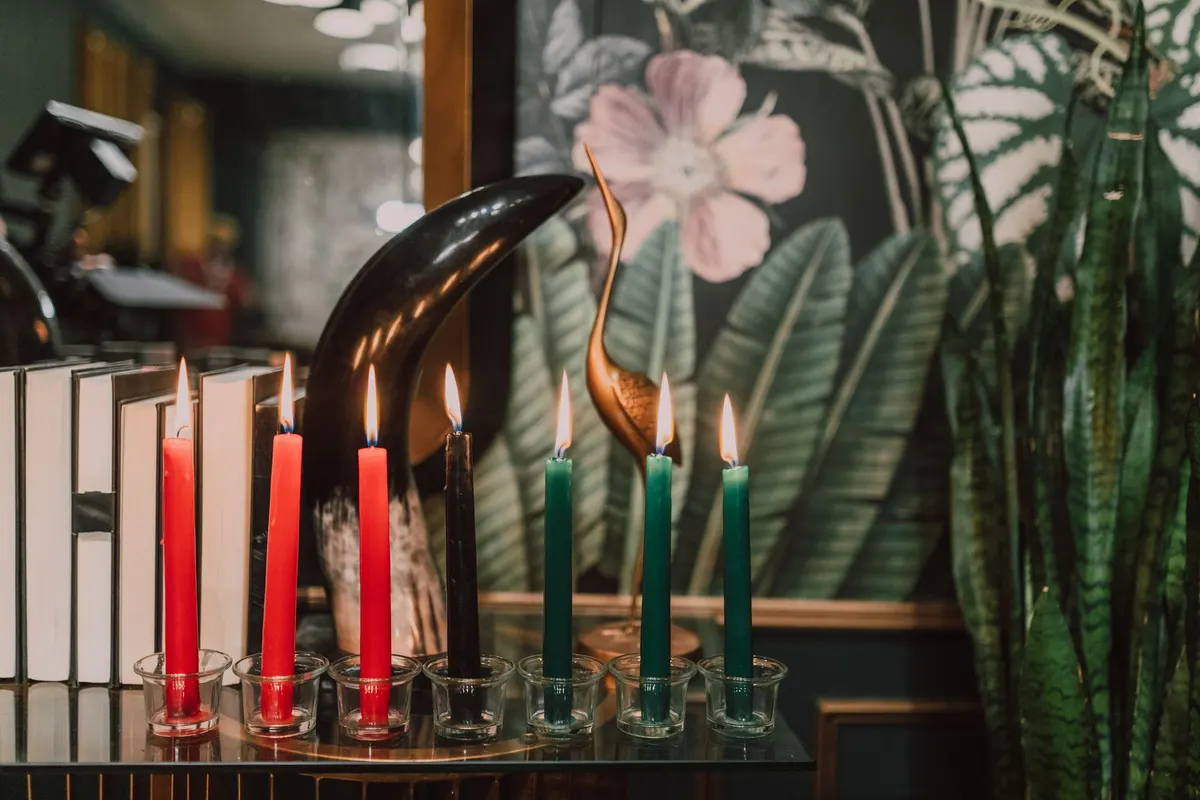
Short on table space? This display sets the seven candles in clear glass cups in a straight row on a glass table, in the same order as a kinara: red, red, red, black, green, green, green. A row of upright books, a curved horn sculpture and a brass bird stand behind them. A console or sideboard about 4 feet long keeps the candles away from elbows. Keep at least 12 inches between the flames and the books, or use flameless candles if the display is near a curtain. Treat this as a second display; the kinara stays the main one.
6. Fill a tray with mazao
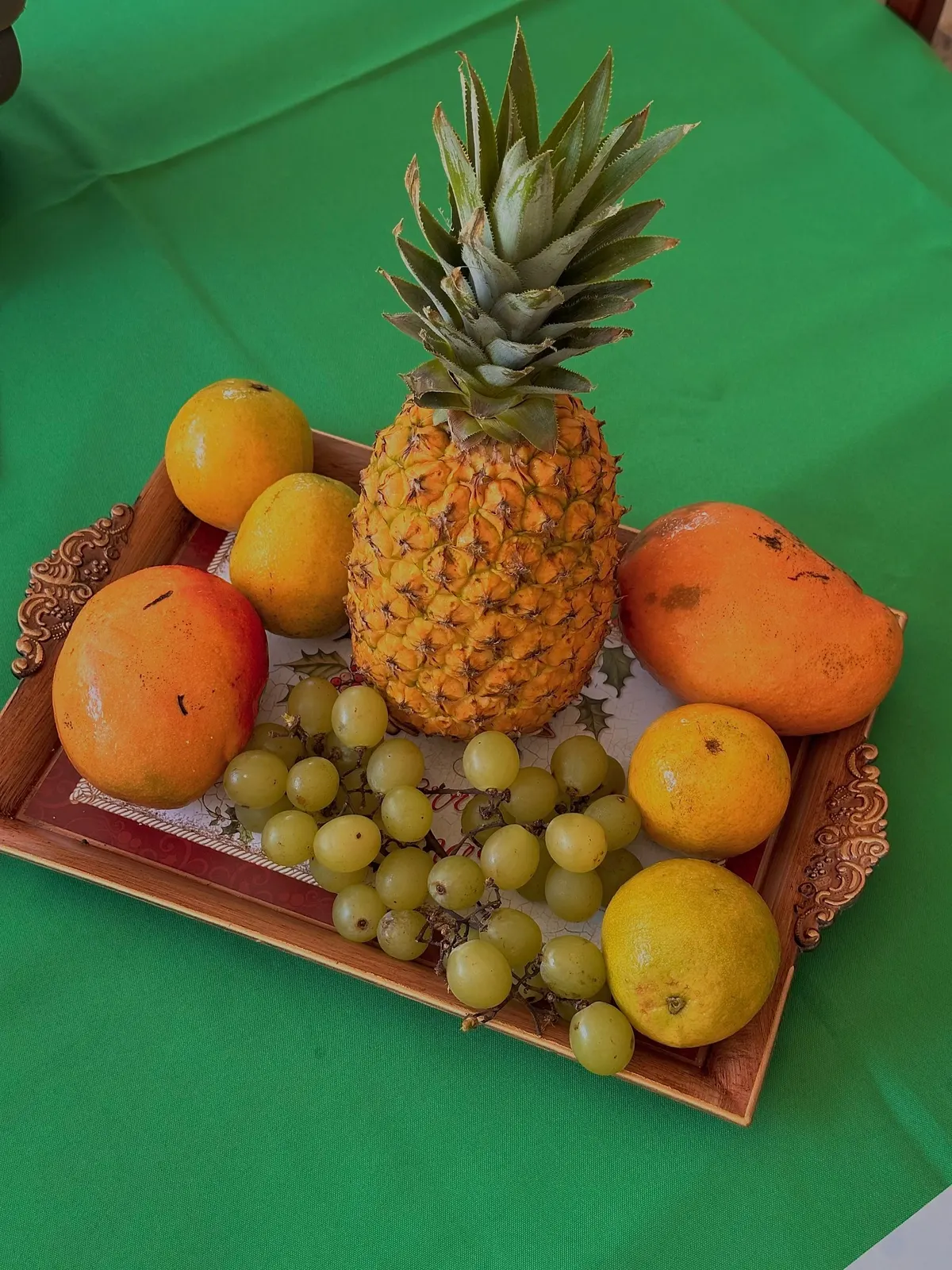
The mazao (crops) stand for African harvest celebrations and the rewards of productive, collective work. Kwanzaa.org describes the arrangement as an abundant array of fresh fruits and vegetables. This wooden tray with brass handles holds one pineapple, two mangoes, four citrus fruits and a long bunch of green grapes. Choose a plain bowl, basket or tray about 12 to 16 inches long. One Kwanzaa guide specifically warns against using a cornucopia, since it comes from a Western harvest tradition. Buy the fruit close to December 26 and swap out anything that softens.
7. Group the mazao with the kinara
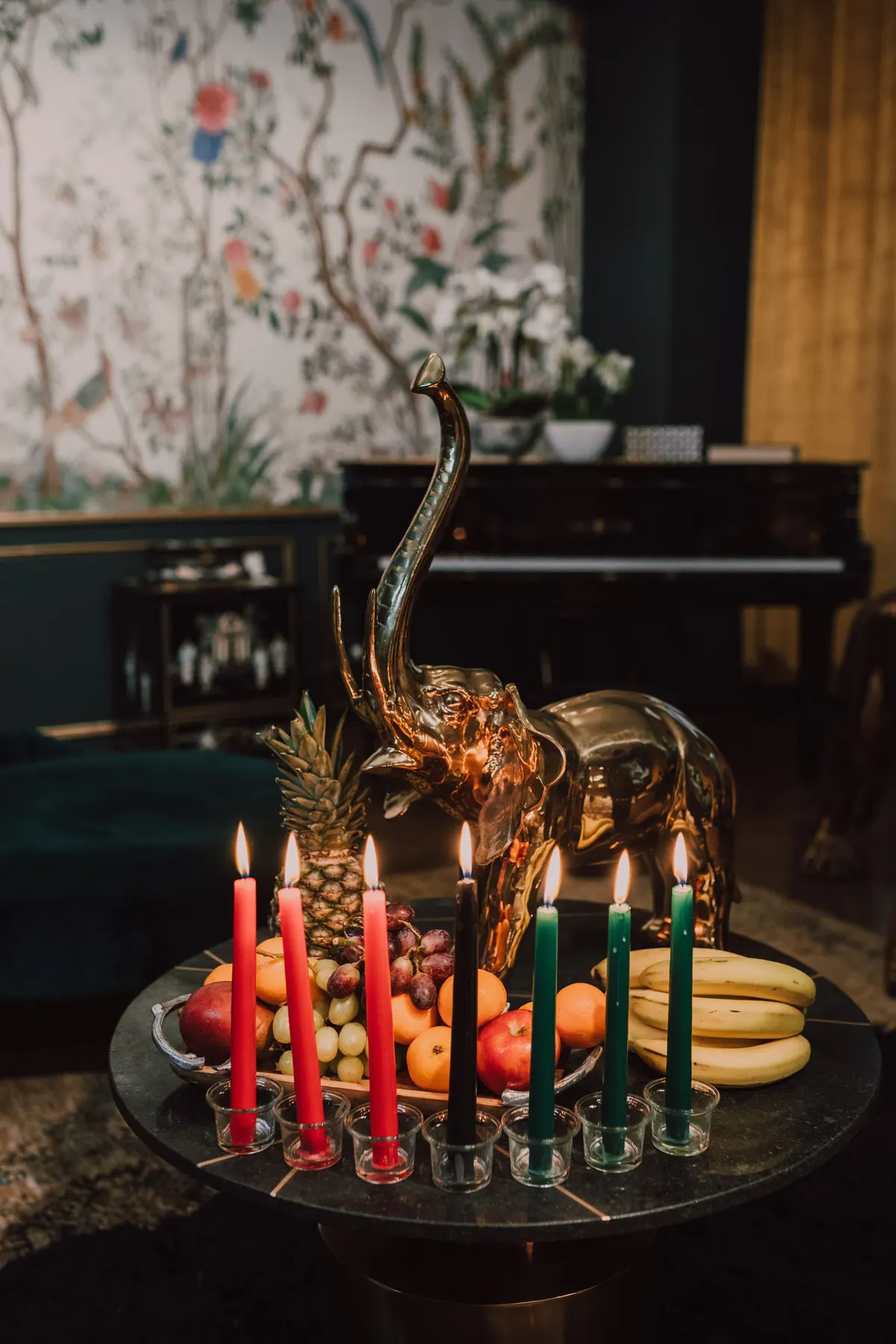
Setting the fruit right beside the candles makes the harvest meaning easy to see. In this display, seven lit candles in glass cups (three red, one black, three green) stand in front of a silver tray piled with a pineapple, red apples, green and red grapes and oranges, with a bunch of bananas alongside. A gold elephant sculpture sits behind the fruit, and a piano with potted white flowers fills the background. To copy it, set the fruit tray 4 to 6 inches behind the candle row so nothing leans into a flame. Keep soft fruit on the outer edge, where it's easy to replace.
8. Set out muhindi for the children
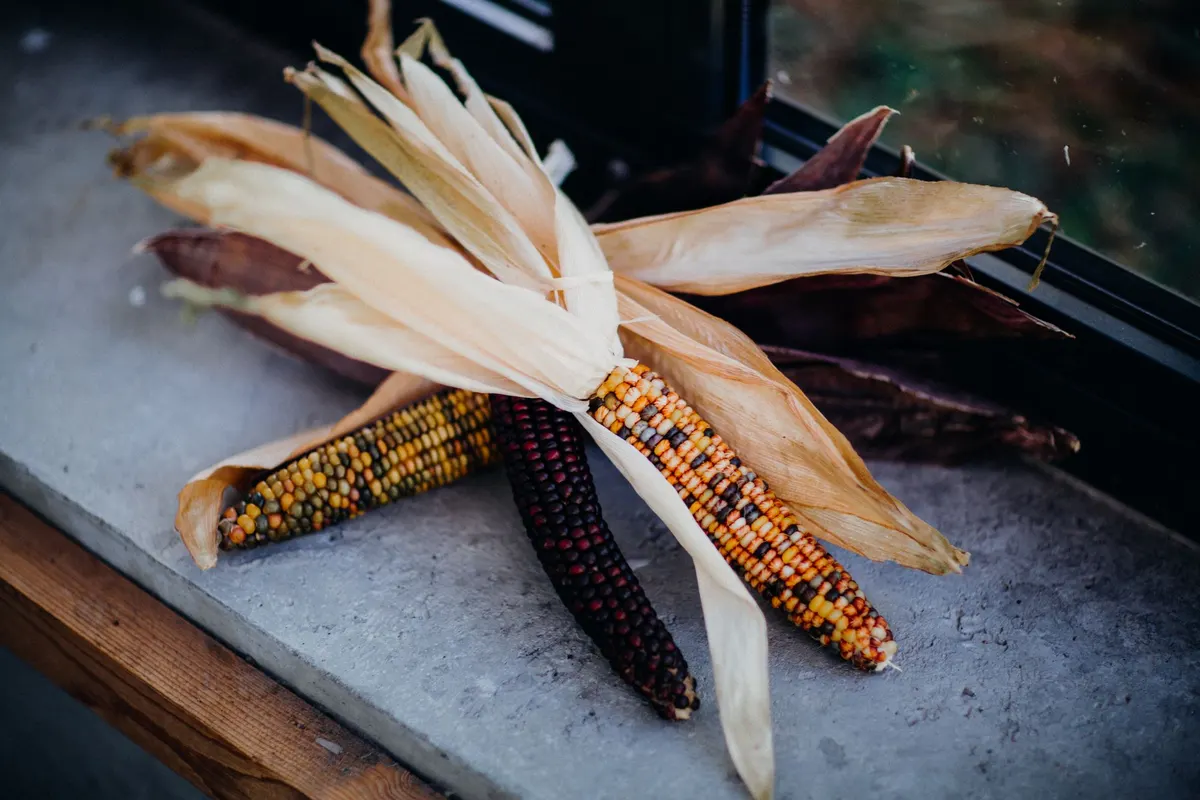
The muhindi (ears of corn) represent children and the future they embody. Many families set out one ear for each child in the home. Kwanzaa.org says households without children are still encouraged to include at least two ears, for the children of the community. Dried ornamental corn like these three ears, in gold, burgundy and mixed colors, keeps all week and comes back out next year. Lay the ears flat on the mkeka in front of or beside the kinara with the husks pulled back. Farm stands and craft stores sell dried corn in the fall, so buy it early.
9. Choose one kikombe cha umoja
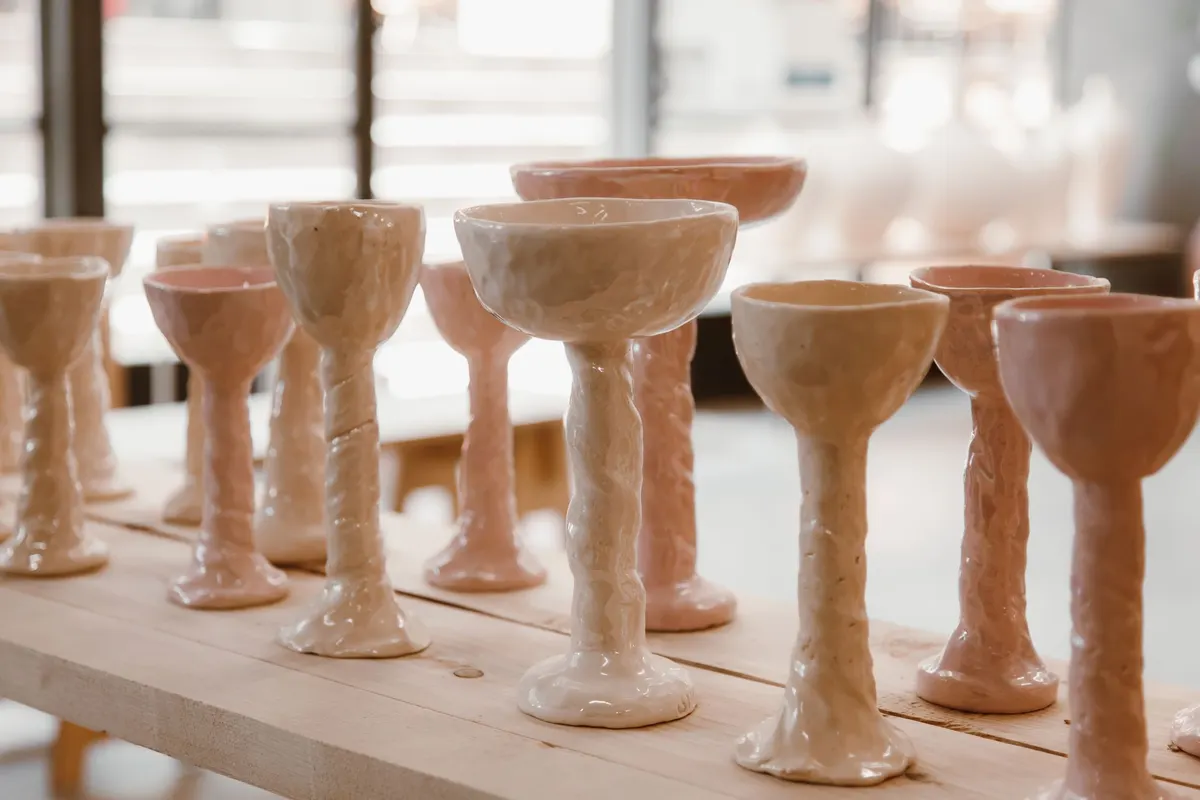
The kikombe cha umoja (unity cup) stands for unity, the principle that makes everything else possible. Karenga writes that it is used to drink from after a statement of unity and to pour tambiko, a libation in honor of the ancestors. Any single goblet or chalice can serve. A handmade ceramic goblet like the cream and pink ones in this photo is a good choice, and so is a carved wooden cup. Pick one about 5 to 7 inches tall so it reads next to the kinara. Set it on the mkeka to the right or left of the candles, where it can be lifted without reaching across a flame.
10. Hang the bendera near the kinara
The bendera (flag) is one of Kwanzaa's two supplemental symbols. The official Kwanzaa website lists its colors in a set order: black first for the people, then red for their struggle, then green for the future that comes from it. The flag is based on the colors Marcus Garvey gave as national colors for African people. Hang a flag about 3 by 5 feet on the wall behind your Kwanzaa table, or stand a small 12 by 18 inch one in a vase beside the mat. For a free version, glue black, red and green fabric strips onto a dowel in that order.
11. Put up a Nguzo Saba poster
The second supplemental symbol is a written display of the Nguzo Saba. The official site says some form of it should always be part of the Kwanzaa set. List the seven principles in their day order: Umoja (unity), Kujichagulia (self-determination), Ujima (collective work and responsibility), Ujamaa (cooperative economics), Nia (purpose), Kuumba (creativity) and Imani (faith). A sheet of 18 by 24 inch poster board, a black marker and red and green paint are enough. Leave space under each principle for notes on how the family practiced it that day, and hang it at kids' eye level.
12. Run a striped runner in the Kwanzaa colors
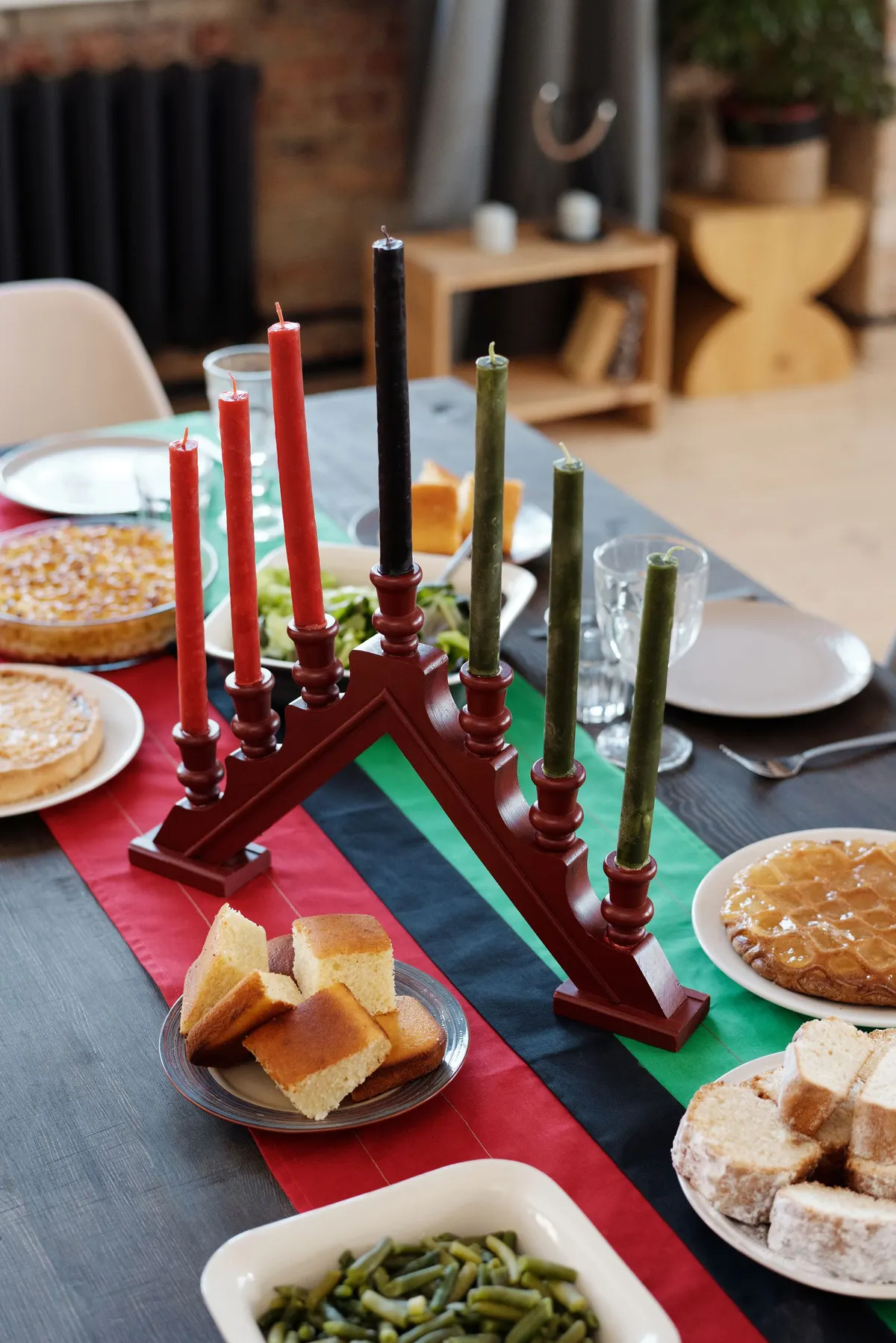
A runner in the three colors carries them across a whole table without extra clutter. This one has wide red, black and green stripes with thin gold lines through the red. It runs under a wooden kinara with dishes of cornbread, green beans and salad around it. Buy or sew a runner about 14 inches wide and 12 to 18 inches longer than your table, so it hangs down 6 to 9 inches at each end. If you can't find one, lay three narrow fabric strips side by side. Kwanzaa.org lists African cloth patterns among the right decorations, so a kente-style or mud cloth runner fits too.
13. Hang bunting and streamers in black, red and green
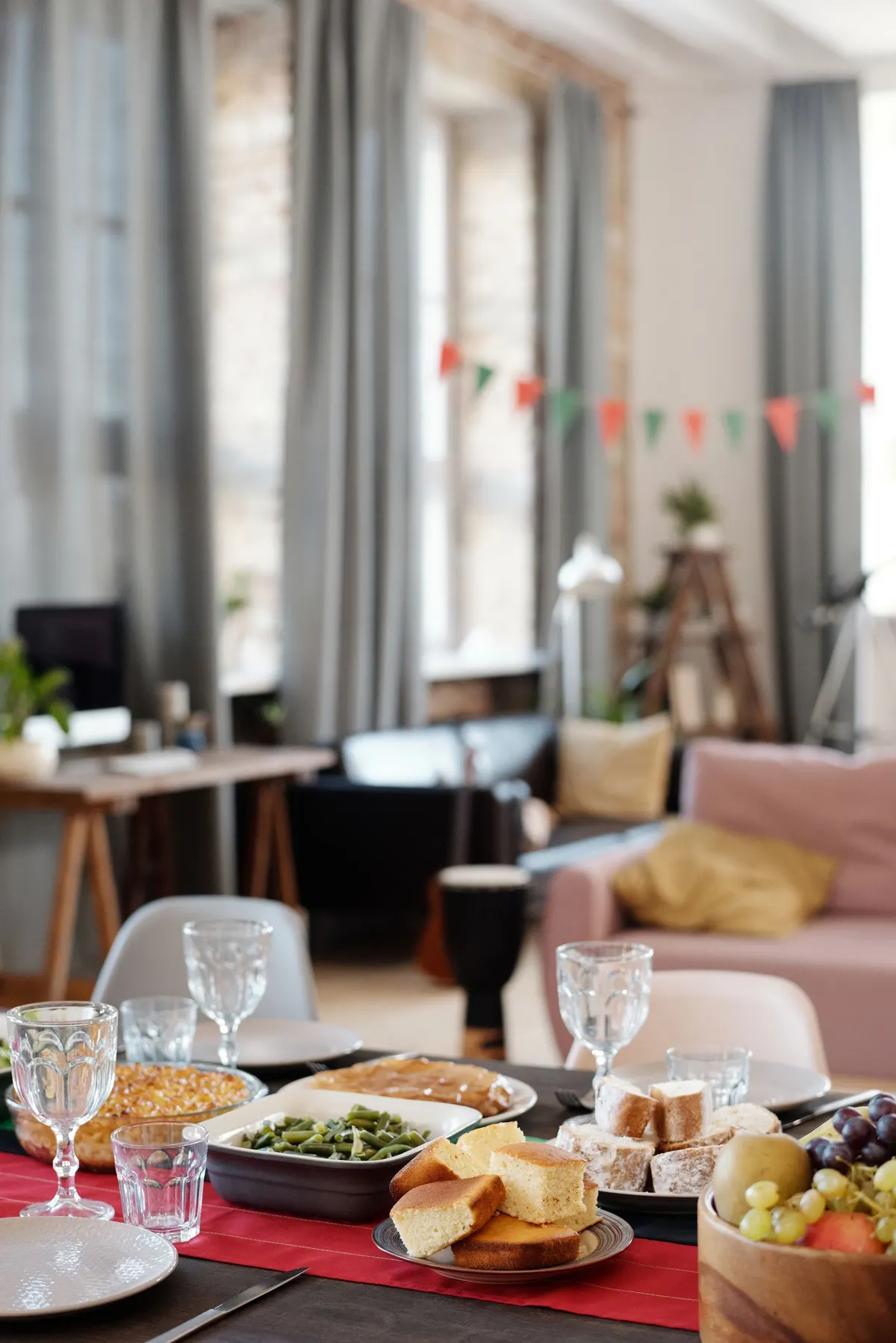
One widely shared Kwanzaa guide suggests black, red and green streamers, balloons, cloth, flowers and African prints hung around the room. In this dining room, a string of red and green pennants crosses the tall windows above a table with a red runner, a fruit bowl and baked dishes. Add black pennants to the string so all three colors show. Cut 20 to 30 triangles about 6 inches wide from felt or cardstock and staple them to 10 feet of ribbon. Hang the bunting with removable hooks, and keep it well above the kinara so a sagging pennant can't drift near a flame.
14. Dress the Karamu table for December 31
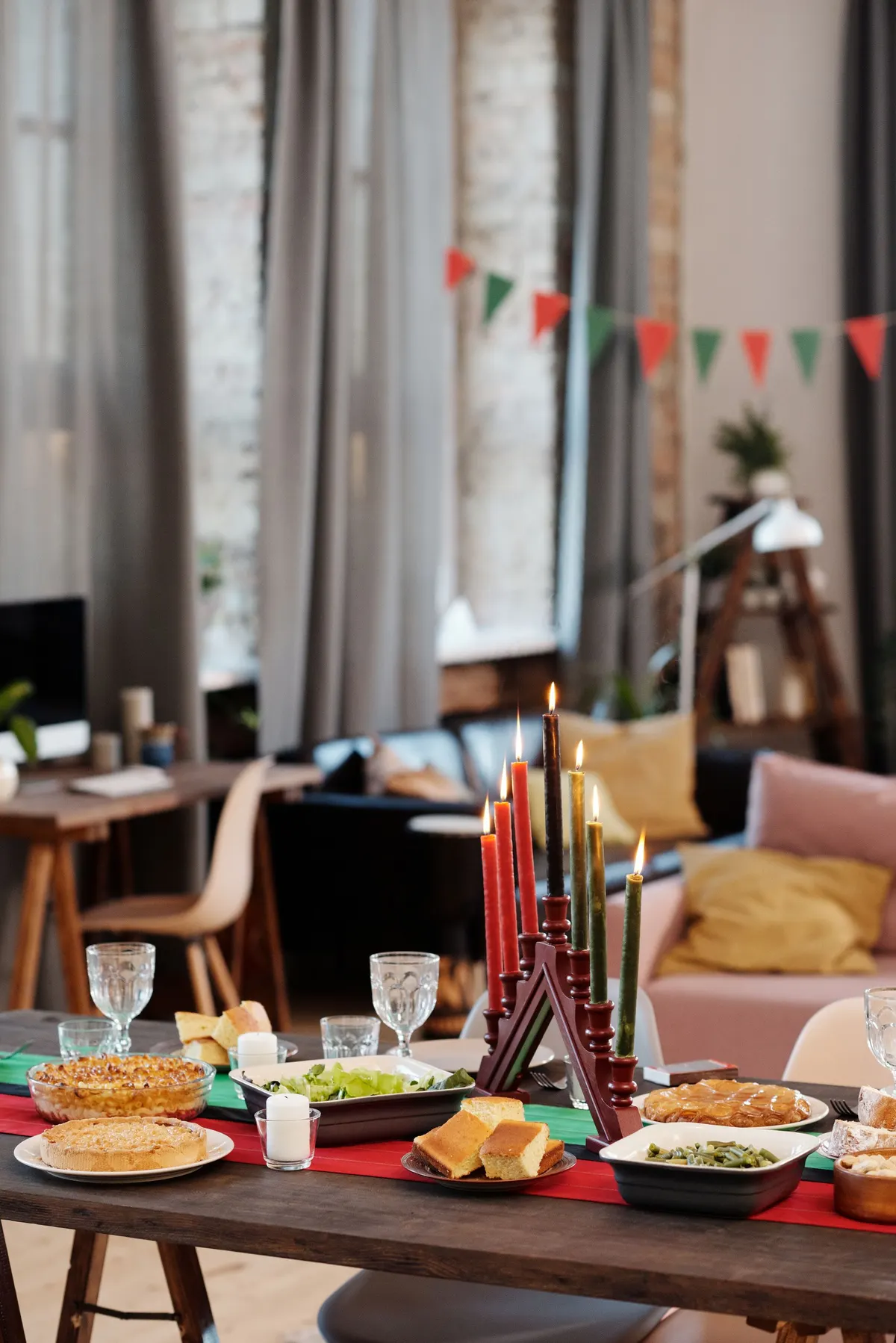
The Karamu is the Kwanzaa feast. The Smithsonian's African American history museum places it on December 31, the sixth day. This table shows a lit kinara surrounded by casseroles, cornbread, salad and green beans on a red runner, with stemmed glasses and bunting in the background. Plan for one large serving dish for every four to six guests, and keep the kinara at one end or on a side table so serving dishes don't crowd the candles. The museum notes that favorite African American dishes and traditional African, Caribbean and South American recipes all show up on Kwanzaa menus. If you're also hosting New Year's Eve, borrow ideas from our New Year's Eve decorations.
15. Plan zawadi with a book and a heritage symbol
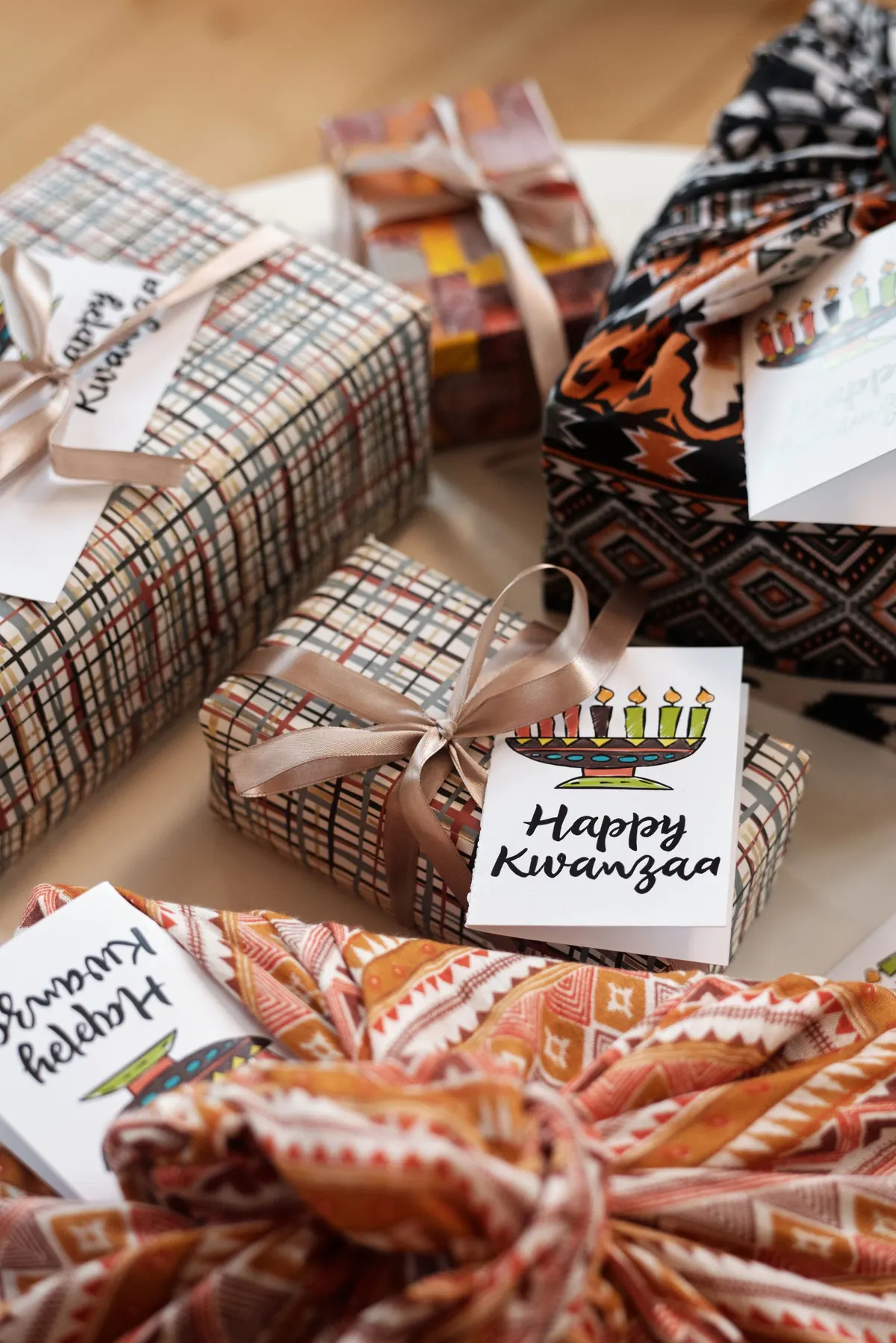
The zawadi (gifts) represent the labor and love of parents and the commitments that children make and keep. Karenga writes that the gifts should never be overly expensive and should always include a book and a heritage symbol. In this photo, five gifts are wrapped in plaid paper and patterned fabric next to white "Happy Kwanzaa" cards. Plan one book and one small heritage item per child, such as a carved figure, a print or a piece of cloth. One Kwanzaa guide notes that gifts are often given on January 1, the last day. Stack the wrapped gifts beside the mkeka until then.
16. Wrap gifts in fabric and make your own tags
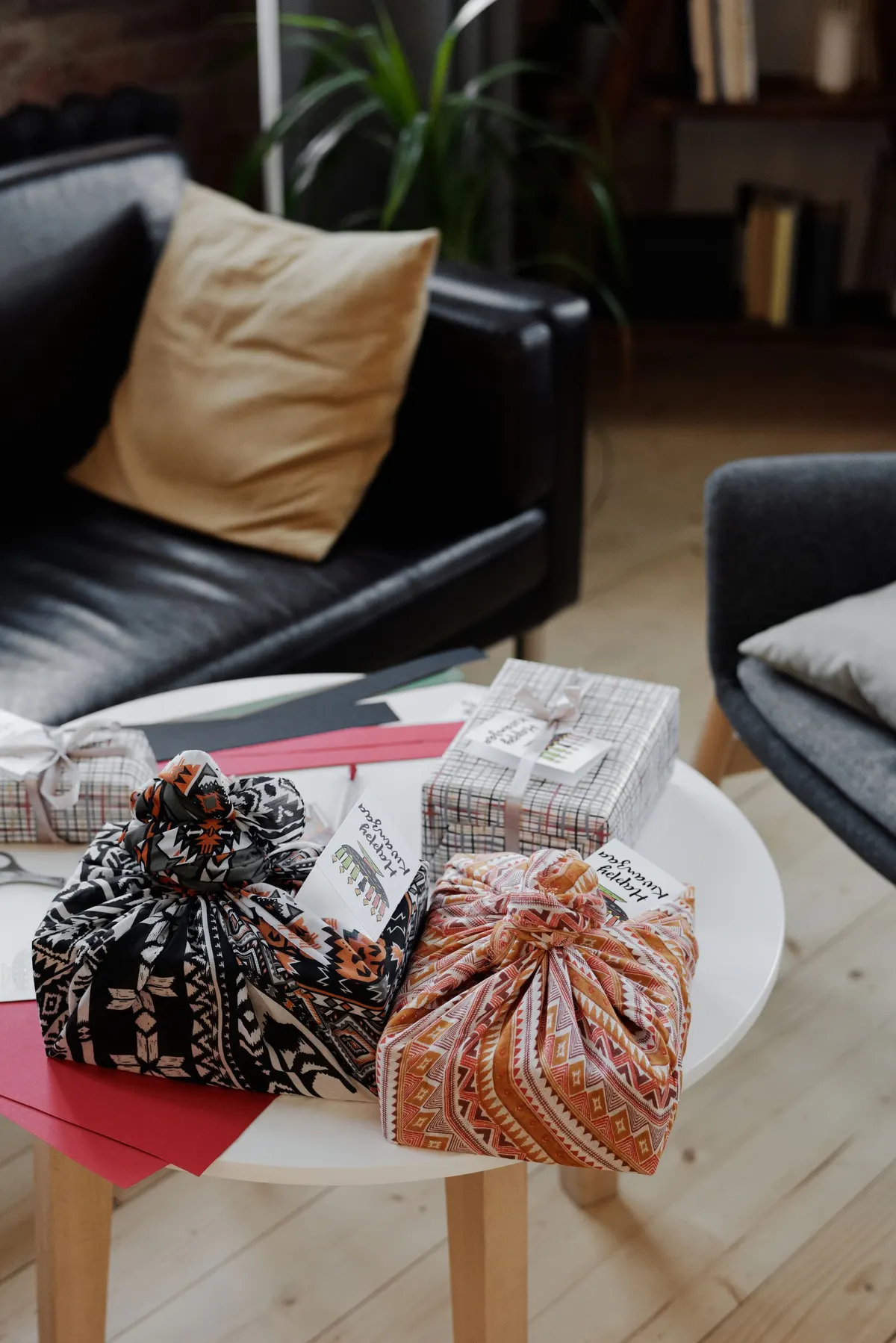
Fabric wrap looks good under the kinara and can be reused next year. Cut a square of cotton print about 20 by 20 inches for a book-sized gift, set the gift in the middle, and tie the opposite corners in a knot on top. The two knotted gifts in this photo are wrapped in black, white and orange geometric cloth and in orange, red and cream prints. Red, black and green paper and a pair of scissors sit beside them for the tags. Fold a 3 by 4 inch card, draw a small kinara, and write the child's name. Fabric remnant bins at craft stores are a cheap source.
17. Hang woven baskets and plates on a wall
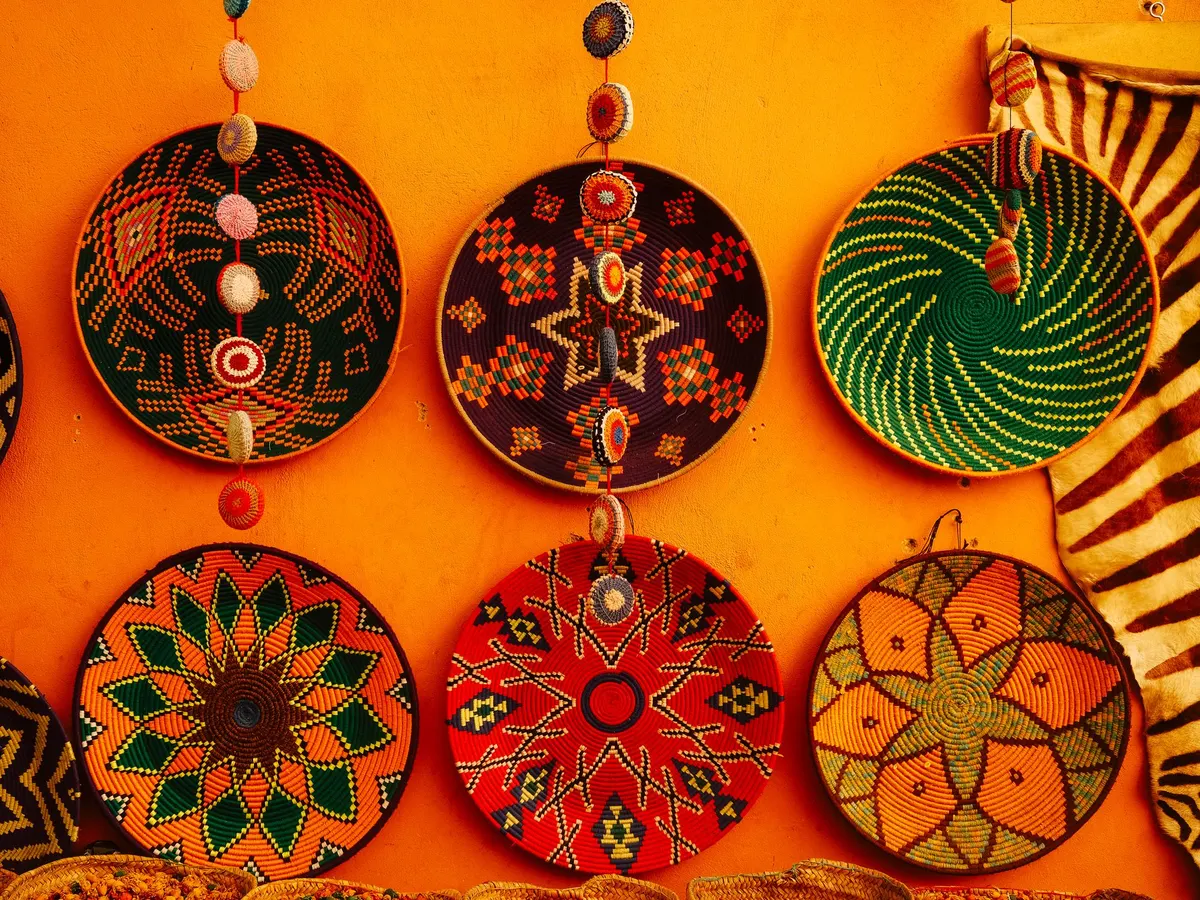
Kwanzaa.org recommends decorations that include traditional African items such as baskets, cloth patterns and art objects. A wall of round woven plates is an easy way to do that. This one has six plates in green, purple, red, orange and yellow patterns, arranged three over three on an orange wall. Use plates or shallow baskets 10 to 14 inches across and space them about 3 inches apart. Hang each one on a small nail or a removable hook through the back weave. Lay the arrangement out on the floor first so you can copy the spacing.
18. Display a drum or a piece of art
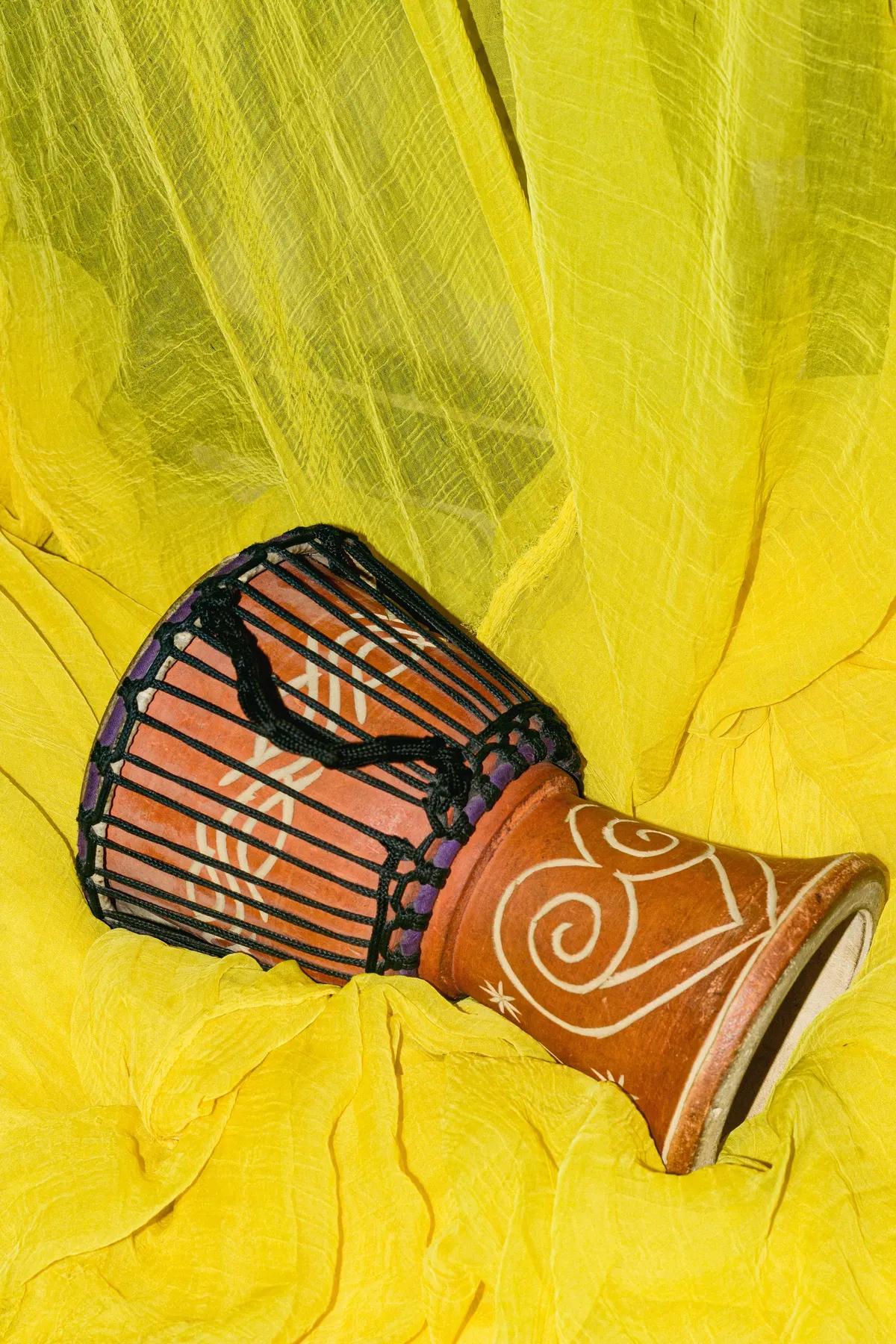
One Kwanzaa guide suggests displaying original art and sculpture, and the Smithsonian's African American history museum lists African drumming among the week's activities. A djembe like this one, carved in orange-brown wood with white swirls, black rope lacing and purple bands, makes a strong accent on yellow fabric. Set a drum 12 to 24 inches tall on the floor beside the Kwanzaa table, or put a smaller carving or framed print on a shelf nearby. Use pieces you or your family already own first, or look for work by local Black artists at holiday markets, which also fits Ujamaa (cooperative economics).
19. Make a paper kinara with the kids
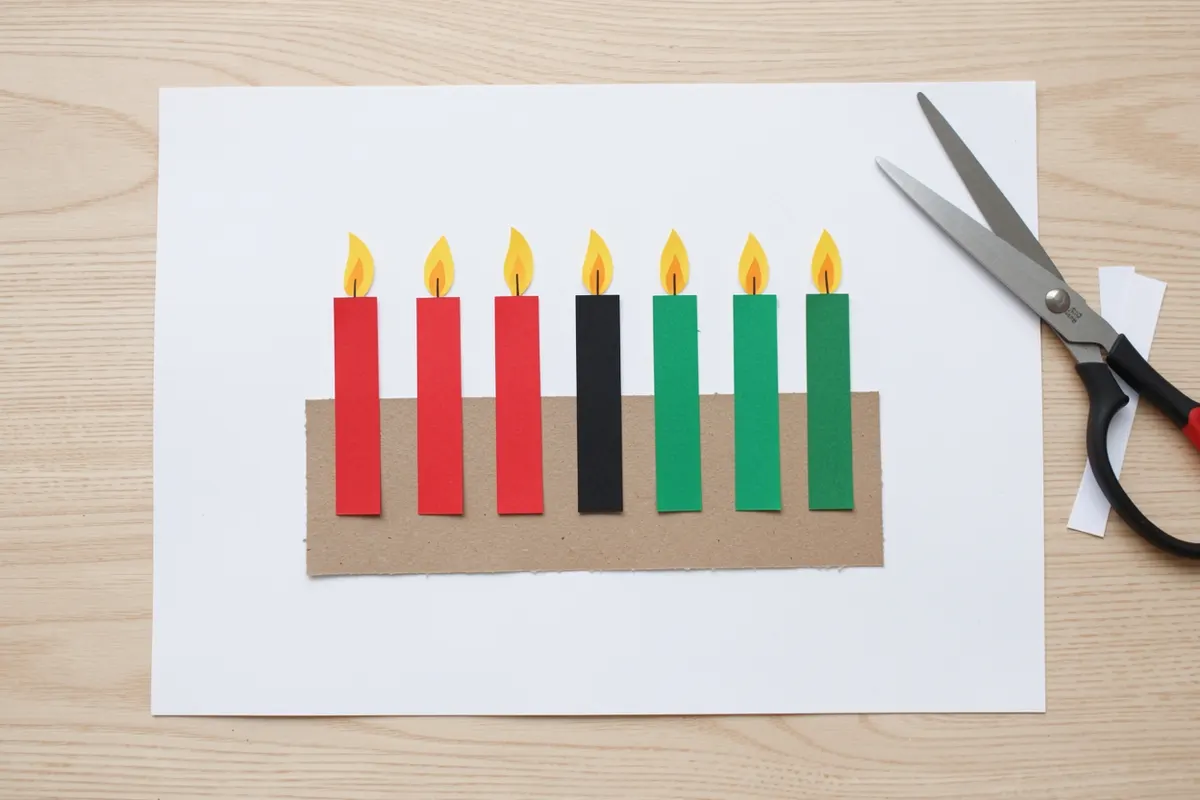
A paper kinara teaches the candle order while kids cut and glue. Start with a sheet of white cardstock and a strip of brown kraft paper about 8 inches long for the holder. Cut seven candle rectangles about 1 by 4 inches: three red, one black and three green. Glue the black candle in the center, the reds to its left and the greens to its right, then add yellow or orange paper flames. For a daily version, glue the flames on one at a time, one each evening from December 26 to January 1. The whole project costs only a few sheets of construction paper.
20. Weave a paper mkeka
Kids can make their own mkeka in about 30 minutes. Fold a 12 by 18 inch sheet of black construction paper in half the short way and cut slits about 1 inch apart from the fold, stopping 1 inch from the edge. Unfold it, then weave 1-inch strips of red and green paper over and under through the slits, alternating colors. Push each strip snug and glue the ends flat. The mat can hold a paper kinara or serve as a Karamu placemat. Older kids can write one of the seven principles on each strip before weaving.
Final tips
- Set up in the official order: cloth, then mkeka, then kinara and candles, then the other symbols.
- Keep straw mats, paper crafts and bunting clear of open flames, and never leave lit candles alone.
- Buy candles, corn and the unity cup in early December, and fresh fruit last.
- Store the kinara, corn, flag and fabric wraps in one box for next year.
- For more ways to dress a dining table, browse our table decor ideas.
Frequently asked questions
What are the colors of Kwanzaa and what do they mean?
Kwanzaa's colors are black, red and green. The official Kwanzaa website explains them as black for the people, red for their struggle, and green for the future and hope that come from that struggle. They are the colors of the bendera, or flag, and they set the palette for candles, cloth and room decorations.
What order do you light the Kwanzaa candles in?
The black candle sits in the center of the kinara and is lit first, on December 26, for Umoja. The three red candles go on its left and the three green on its right. The official Kwanzaa website says the remaining candles are then lit from left to right on the following days, one new candle per day.
What are the seven symbols of Kwanzaa?
The seven basic symbols are the mazao (crops), mkeka (mat), kinara (candle holder), muhindi (corn), mishumaa saba (seven candles), kikombe cha umoja (unity cup) and zawadi (gifts). The two supplemental symbols are the bendera, a black, red and green flag, and a poster or other written display of the Nguzo Saba, the Seven Principles.
Can you mix Kwanzaa decorations with Christmas decorations?
Kwanzaa is a cultural holiday, not a religious one, and people of many faiths celebrate it. The official Kwanzaa website asks celebrants not to mix its symbols with those of other cultures or holidays. If your home marks both, give the kinara and the other symbols their own table instead of setting them under the tree.
What do you put on a Kwanzaa table?
Spread an African-print cloth, lay the mkeka on top, and set the kinara with its seven candles on the mat. Around it, place the mazao in a bowl or basket, ears of corn, the unity cup and any gifts. Add a Nguzo Saba poster and the bendera nearby. Keep cloth and straw clear of the flames.
You might also like
 World holidays
Hanukkah Decorations: 20 Menorah, Table and Door Ideas
 World holidays
Lunar New Year Decorations: 20 Ideas for 2027, Year of the Goat
 World holidays
20 Diwali Decoration Ideas for Your Home
 Christmas
Christmas Table Decor Ideas: 20 Linens, Runners & Centerpieces
 Thanksgiving
Friendsgiving Decor Ideas for Apartments, Buffets & Small Tables
 Christmas
Gingerbread House Ideas: 21 Decorating Styles With Candy Counts